


By Kingsley Webora TANKEH
Vice President Professor Jane Naana Opoku-Agyemang has expressed concern over the African Small- and Medium-sized Enterprise (SME) sector’s meagre contribution to export trade despite being the continent’s major employer.
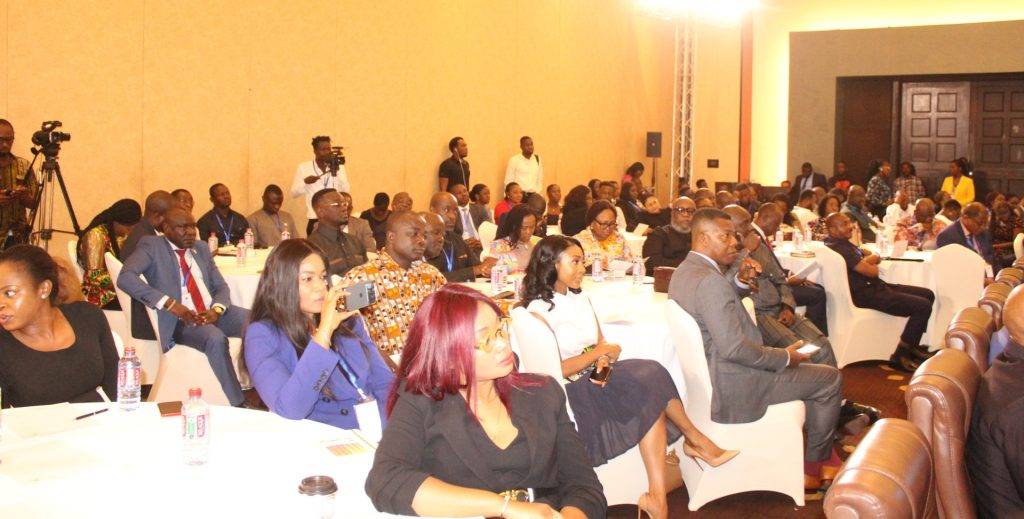
Speaking at the Africa Prosperity Dialogues (APD) 2026 in Accra, Prof. Opoku-Agyemang said the SME sector is central to effective cross-border trade under the African Continental Free Trade Area (AfCFTA) protocol, “yet fewer than 20 percent of SMEs engage in export trade”.
“Africa’s SMEs are often cited as generating over 80 percent of employment and a significant share of GDP. However, this potential is not yet fully reflected in cross-border participation,” Prof. Opoku-Agyemang noted.
She therefore maintained that success in the SME sector demands a deliberate and sustained approach to dismantle the barriers women and youth face.
Prof. Opoku-Agyemang indicated that women still face barriers to finance, mobility and market access, which pose a severe macroeconomic risk that could lead to wasting over half of Africa’s human potential.
“A future that excludes young people, women and small enterprises is not one we can afford to sleepwalk into,” she asserted.
She maintained that if no deliberate policy interventions are made to upskill, improve access to capital and provide institutional support for the youth to scale their ideas across borders, “many of our economies risk remaining trapped in low productivity models, exporting raw materials, importing finished goods and watching talented young Africans seek opportunity elsewhere”.
The First Lady of Angola, Ana Dias Lourenço, echoed similar caution. “The economic exclusion of women and youth constitutes a serious structural risk to the stability and competitiveness of our continent. Inclusion is not merely a moral imperative; it is a smart strategy,” she stated, positioning women and youth in trade as “central and non-negotiable”.
She noted that for AfCFTA to succeed, it must go beyond “bureaucratic protocols” to become a “strategic instrument” for equitable prosperity. She therefore advocated that women farmers and youth be granted unfettered access to green technologies, stressing “there can be no sustainable free trade without climate-resilient agriculture”.

The African Continental Free Trade Area (AfCFTA) is the world’s largest free trade area by number of participating countries, comprising 54 African countries with a combined population of about 1.3 billion people.
As many African leaders continue to tout AfCFTA as the panacea for underdevelopment on the continent, a means to shared prosperity and an engine to empower entrepreneurs and spur growth in Africa, Prof. Opoku-Agyemang emphasised the need for long-term policies and robust development finance institutions. “Strong institutions and effective governance are essential to sustain progress,” she stated.
“We must continue to integrate our borders. Africa must unite. This is not about erasing sovereignty. It is about organising our sovereignty in service of shared prosperity and our markets,” she added.
She admonished African countries to implement industrial strategies that strengthen priority sectors, build skills and support sustainable production to expand trade within the continent.
“We must continue to invest in infrastructure and connectivity while establishing the conditions for innovation and technology,” she added.
Prof. Opoku-Agyemang described the 24-hour economy as a plan to “unlock productivity by better coordinating infrastructure, finance and institutions, ensuring that businesses and workers are no longer constrained by avoidable bottlenecks or lost time”.
The Africa Prosperity Dialogues (APD) 2026 were held on the theme ‘Empowering SMEs, Women & Youth in Africa’s Single Market: Innovate. Collaborate. Trade’.
The post Veep bemoans low SME participation in AfCFTA trade appeared first on The Business & Financial Times.
Read Full Story










Facebook
Twitter
Pinterest
Instagram
Google+
YouTube
LinkedIn
RSS