


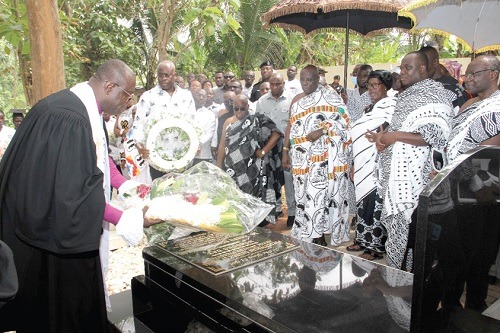
When cholera swept through parts of the Western Region in December 2024, it did not just leave statistics behind. It left grieving families, empty chairs at dinner tables, and communities struggling to understand how a preventable disease could claim 16 lives and infect more than 1,700 people.
For many residents, the pain is still fresh.
It is that memory that framed the tone of Western Regional Minister, Joseph Nelson’s visit to the Nzema East Municipality this week. Standing before assembly staff during a working tour, the Minister delivered a firm directive: enforce sanitation bylaws strictly and without compromise.
“We must not experience this again,” he stressed, making it clear that under his tenure, the region cannot afford another outbreak of such magnitude.
The 2024 cholera crisis exposed gaps in sanitation enforcement, waste management, and environmental regulation. In several communities, choked drains, indiscriminate dumping of refuse, and poorly planned structures created the conditions for the disease to spread rapidly.
Now, Mr. Nelson is demanding a shift from reaction to prevention. He has directed all Municipal and District Chief Executives and Coordinating Directors across the Western Region to ensure sanitation regulations are not merely written policies, but actively enforced laws.
According to him, protecting public health must become a daily responsibility, not an emergency response.
Beyond waste management, the Minister also raised concerns about the indiscriminate siting of buildings. Unapproved structures, especially those obstructing waterways or erected without proper planning clearance, he noted, often worsen flooding and sanitation challenges.
Assemblies, he urged, must ensure that all structures are built in approved locations to prevent environmental hazards that could spiral into public health crises. For residents in municipalities like Nzema East, the renewed focus on sanitation brings cautious hope. Many recall the fear that gripped households during the outbreak — parents worrying about their children, traders watching customers dwindle, and health workers stretched to their limits.
But while the directive signals urgency at the regional level, local authorities say implementation will require more than resolve.
Nzema East Municipal Chief Executive Herbert Kua Dickson used the occasion to highlight challenges confronting the Assembly. A severe shortage of office space and logistics, he said, is undermining effective service delivery in the municipality.
Limited resources, inadequate equipment, and infrastructure constraints make enforcement difficult, even when the will exists. The situation underscores a broader tension: the urgent need to safeguard public health against the practical realities facing local administrations.
Still, the Minister’s message was unambiguous, complacency is not an option.
For families who lost loved ones in 2024, the call for stricter enforcement is more than administrative reform; it is a promise that their pain will not be forgotten.
As the Western Region moves forward, the real test will lie not in speeches or directives, but in cleaner streets, unclogged drains, properly planned communities, and a collective commitment to preventing history from repeating itself.
For more news, join The Chronicle Newspaper channel on WhatsApp: https://whatsapp.com/channel/0029VbBSs55E50UqNPvSOm2z
The post We Cannot Bury Our People Again: Minister moves to stop another Cholera tragedy appeared first on The Ghanaian Chronicle.
Read Full Story











Facebook
Twitter
Pinterest
Instagram
Google+
YouTube
LinkedIn
RSS