


The government has unveiled an elaborate licensing framework for Ghana’s medicinal cannabis sector, requiring businesses to obtain activity-specific permits before operating.
The regulatory framework is governed by the Narcotics Control Commission (Amendment) Act, 2023 (Act 1100), and the Narcotics Control Commission (Cultivation and Management of Cannabis) Regulation, 2023 (L.I. 2475), and supervised by the NACOC through its Cannabis Regulatory Department.
Among others, the framework is for cultivation, processing, and sale of cultivars, grains, seeds, and biomass of cannabis, which have not more than 0.3% THC on a dry weight basis, strictly for medical and industrial purposes.
At a press conference on Thursday, February 26, 2026, the minister for the Interior, Mohammed Muntaka Mubarak, who launched it, said a total of 11 licences will govern the industry. The licences are for cultivation, breeding, processing, export, laboratory, import, transport, storage, distribution and sale, advertising and promotion, and research and development.
According to him, each licence will be site-specific, activity-specific and non-transferable. “You cannot cultivate and assume you can transport it. You need another licence for that,” he explained. Under the regulations, licences will be issued for three years and will be renewable upon compliance with all conditions.
QUALIFICATION
The minister indicated that, to qualify, an individual must be a Ghanaian citizen or permanent resident aged 18 and above. Corporate entities must be at least 50 per cent Ghanaian-owned, with the majority of directors being Ghanaians.
He described the local ownership requirement as “non-negotiable,” stating that Ghanaian resources must primarily benefit citizens. Only the Interior Minister, acting on recommendations from the NARCOC, has the authority to grant, suspend or revoke licences.
PROCESS
Applications will be processed through an online portal to eliminate middlemen and ensure transparency, the minister noted. He explained that “we want to avoid human interference so that we don’t create corridor brokers.”
The licensing fees are provided under the Fees and Charges Miscellaneous Provision Amendment Regulation approved by the Parliament of Ghana, with small-scale application fees starting at the equivalent of about 1,000 US dollars.
STRINGENT
The Interior Minister, Muntaka Mohammed-Mubarak, said the programme introduces one of the most stringent regulatory regimes in the emerging global cannabis industry. He emphasised that Ghana is not legalising marijuana for recreational purposes, stressing that cannabis containing more than 0.3 per cent THC remains illegal.
“This is about job creation, medicine and revenue, not about recreational use of drugs,” the minister told journalists.
He said that the initiative draws lessons from countries such as Canada, the United States of America, the United Kingdom and Germany, where regulated cannabis industries generate significant revenue.
He revealed that the legal cannabis market in Canada alone generated more than 800 million Canadian dollars between 2020 and 2023, surpassing earnings from beer, wine and tobacco combined.
Authorities expect the programme to reduce illegal cultivation by offering farmers a lawful and profitable alternative while attracting both local and foreign investment.
“We are creating a world-class Ghanaian-controlled industrial cannabis sector while protecting public health and national security,” he said.
The post Government Introduces 11-Licence Regime for Cannabis Industry appeared first on The Ghanaian Chronicle.
Read Full Story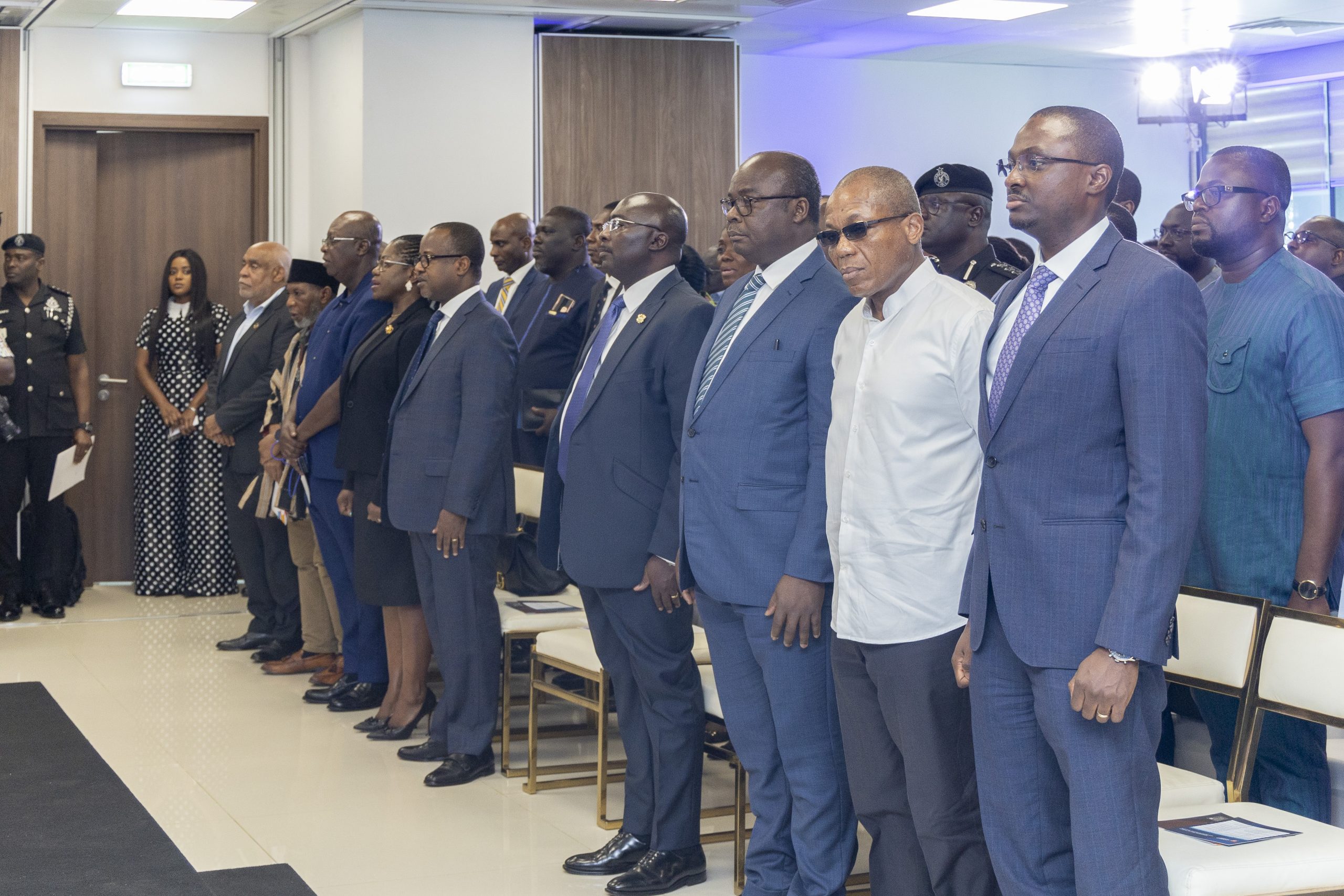





Facebook
Twitter
Pinterest
Instagram
Google+
YouTube
LinkedIn
RSS