


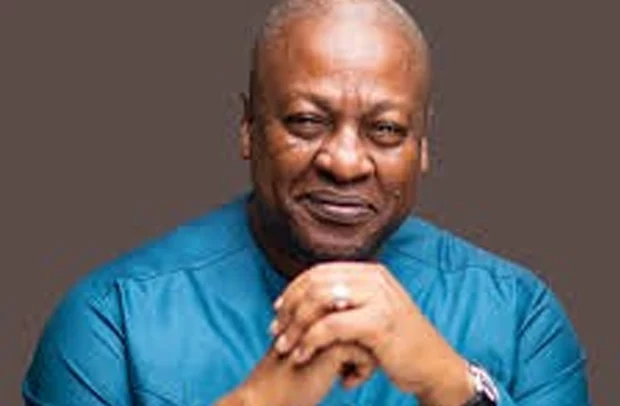
In a solemn chamber that has witnessed the convulsions of nations and the birth of resolutions that shaped the modern world, Ghana’s President John Dramani Mahama stepped to the podium of the United Nations General Assembly on Tuesday and staked his country — and the African continent — on the right side of history.
His mission was not ceremonial.It was surgical.
Speaking on the International Day of Remembrance of the Victims of Slavery and the Transatlantic Slave Trade, President Mahama formally presented a landmark draft resolution on behalf of the African Group, calling on the global community to declare the trafficking of enslaved Africans and the racialised chattel enslavement of Africans the gravest crime against humanity ever perpetrated.
The resolution, if adopted, would be the most consequential moral reckoning the United Nations has attempted since the Holocaust resolutions of the post-war era.
A Long Road to a Single Vote
Mahama opened not with thunder, but with measured philosophy — the kind that signals a man who has rehearsed both the weight of his words and the resistance they will meet.
“Progress is made in steps,” he told the General Assembly. “It’s the forward motion toward something better, and the changes are often incremental.”
It was a deliberate framing. The President was not presenting a sudden radical demand. He was placing Tuesday’s vote as the latest — and most decisive — step in a journey that began with the UN’s own conscience.
He traced that journey with precision: how in 2006, the global community resolved to designate the 25th of March a Day of Remembrance; how in 2007 the event was made annual; and how today, two decades later, that same spirit of incremental justice had arrived at its most consequential threshold.
“That marked an additional step in our forward motion,” he said of the earlier milestones — a phrase that carried the deliberate cadence of a man making a legal and moral argument, not merely a speech.
The Weight of 13 Million
At the heart of Mahama’s address was an accounting. Not of politics. Of people.He reminded the Assembly that approximately 13 million African men, women and children were enslaved over the course of several centuries — torn from their continent, stripped of their names, their languages, their humanity — in what he argued the world has for too long declined to name for what it truly was.
The memorial architecture was not lost on him. He acknowledged the Ark of Return — the memorial monument standing in the Visitors’ Plaza of the UN Headquarters, just outside the hall — as a site of documentation, grief, and the beginning of healing.
“Through these activities, we do more than remember,” Mahama said. “We document and educate; we gain a greater perspective; we find the delicate balance of learning from history so we do not repeat it, while leaving the pain behind.”
But the President made clear that leaving pain behind is not the same as erasing the record of who caused it.
September’s Promise, March’s Reckoning
Mahama reminded delegates that this was not a sudden impulse. At the 80th session of the General Assembly last September, he had publicly committed Ghana to moving this very motion.
Tuesday was the delivery on that promise.
The draft resolution, he explained, was the product of months of careful consultation — involving continental bodies, nations, legal experts, scholars and jurists — with the deliberate aim of building a united front. The architects of the resolution wanted it grounded not in rage or political theatre, but in “truth, compassion, and moral conscience, remembrance, education, and dialogue.”
It was a careful diplomatic construction, designed to survive the inevitable counter-pressures from Western powers who have historically resisted any language that could open the door to formal reparations obligations.
“Today, we come together in solemn solidarity to affirm truth and pursue a route to healing and reparative justice,” Mahama declared. “The adoption of this resolution serves as a safeguard against forgetting.”
Between Roosevelt and King
In a moment of rhetorical elegance that this correspondent found strikingly effective, Mahama closed not with African voices alone — but with two titans of the Western moral tradition.
He quoted Theodore Roosevelt, 26th President of the United States: “With a great moral issue involved, neutrality does not serve righteousness; for to be neutral between right and wrong is to serve wrong.”
Then came the words of Dr Martin Luther King Jr.: “The arc of the moral universe is long, but it bends toward justice.”
The choice was deliberate and shrewd. By invoking two white and Black American icons — one a former president, the other a martyred civil rights leader — Mahama was, in the language of diplomacy, removing the African Group’s resolution from the category of grievance politics and placing it squarely within the universal tradition of moral accountability.
It was a masterstroke. No Western delegate could rise to oppose the resolution without, in the same breath, opposing the words of Roosevelt and King.
What Happens Next
The vote on the resolution remains the defining question. Diplomatic sources at the UN suggest that while African and Caribbean nations are broadly aligned in support, key Western delegations — including some European powers and the United States — have not yet shown their hand.
Observers note that the resolution’s language around “reparative justice” will be its most contested terrain, with some nations wary of legal and financial precedents the wording might establish.
But Mahama appeared untroubled by the politics of delay. His speech was constructed for a longer audience than the room — for the historians, the archivists, the descendants of the enslaved who will read the record of this day long after its participants are gone.
“Let it be recorded,” he said, his voice dropping into the gravity of a man speaking to posterity, “that when history beckoned, we did what was right for the memory of the millions who suffered the indignity of slavery.”
“Let our vote on this resolution restore their dignity and humanity.”
For more news, join The Chronicle Newspaper channel on WhatsApp: https://whatsapp.com/channel/0029VbBSs55E50UqNPvSOm2z
The post MAHAMA TAKES GHANA’S MORAL CRUSADE TO THE WORLD appeared first on The Ghanaian Chronicle.
Read Full Story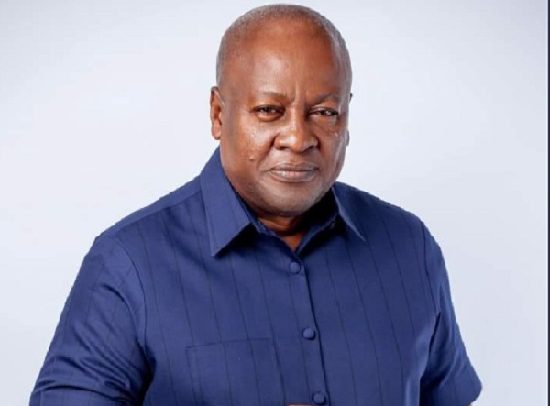





Facebook
Twitter
Pinterest
Instagram
Google+
YouTube
LinkedIn
RSS