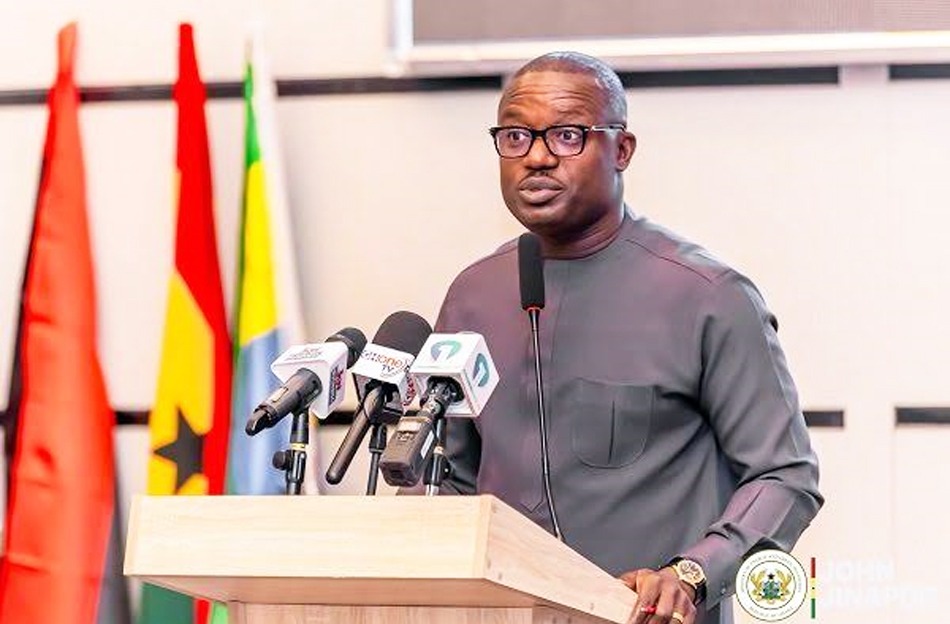
By Bernard Yaw ASHIADEY HFC Bank boss Asare Akuffo says banks cannot be forced to “throw money†at agriculture when the problems with financing the sector have not been addressed. Responding to calls by leading farmer’s organisations for banks to set aside 20 percent of their loan portfolios to agriculture, Mr. Akuffo told B&FT the proposal is not “practicable†under present conditions, as agricultural lending is seen as highly risky by most banks. “I am not in favour of this proposal. Businesses in general, including banks, respond to rational opportunity in the marketplace. The question that must be asked is: ‘why are banks not supporting agriculture?’ The reason is that the risks involved in supporting agriculture today make it unattractive to banks,†he said. “Our agriculture is rain-fed, smallholder, with lack of market opportunities and so forth. Those are the issues that must be addressed. We need to have more irrigation schemes, more commercial farms with out-growers. We can still have small-scale farmers, but they can be out-growers around major commercial farms. They can have insurance for crop losses and they can help create marketing boards. Then banks would love to support agriculture.†Farmer-based organisations (FBOs) in the country recently asked Government to, as a matter of policy, impress upon banks to allocate 20 percent of their loan portfolios to the agricultural sector. “It should be one of the fundamental rules. I know the banks will grumble for now, but over time they will accept it,†said Edward Kareweh, Deputy General Secretary of the General Agricultural Workers Union (GAWU). He said a memorandum on the proposal has been sent to the Ministry of Agriculture and endorsed by the Ghana Federation of Agricultural Producers, the Peasant Farmers Association, the Ghana Trade and Livelihoods Coalition as well as Action Aid Ghana, Oxfam and SEND Ghana. Agriculture is among the sectors that get the least financing from banks, with much of the investment in the sector provided by Government and international donors. Mr. Akuffo said the first step to solving the problem is to look at the concerns of lenders and address them. “This can be done. If you look at what other countries have achieved, these issues can be addressed.†He added: “Forcing banks to put 20 percent of their portfolio into agriculture is not even practicable, because banks will still assess the risk before they lend. So a compulsory commitment of funds to agriculture will not work.†Farmers, like many small-scale business people, consider lack of credit as one of the major barriers to growth as banks do not find the sector attractive enough. High interest rates have also made going for loans from banks a no-go-area for many smallholder farmers. Government has recently expanded the Export Development Fund to include agriculture, but smallholders complain that the fund focuses too much on the cash-crop sector to the neglect of those in the food-crop sector.
By Kizito CUDJOE, Kumasi The Trade Union Congress (TUC) of Ghana has charged public and private sector workers in the country to endeavour to save part of their income toward retirement by making their pension a responsibility while in active employment. This call comes on the heels of the revelation at this year’s May Day celebration that 6% of the 1.6 million people in Ghana above the age of 60 enjoy SSNIT benefit, with some few others being on Cap 30 and University pensions. The remaining 1.5 million are said not to be on any form of pension, with most of them surviving below the national poverty line of GH₵2.00 a day. The TUC believes that these men and women, who have contributed in diverse ways to support growth and development of the country, should be allowed to enjoy a decent retirement and pension after their long period of service to the country. Sadly, however, many people in the country become poor immediately after retirement. A situation the TUC describes as shameful and unacceptable considering the enormous wealth of the country, and demands an immediate redress to change the fate of retirees. It is against this backdrop that a basic income grant has been proposed for all old people who are 60 years and above and not on pension. It was further proposed that the grant be made equal to the inflation-adjusted nutrition-based National Poverty Line and be reviewed upward periodically in line with increases in the cost of living. It is hoped that by so doing, poverty will be eradicated from among those who go on retirement. The TUC however also pledged its commitment to partner the ministry in charge of social protection toward the eradication of poverty among the senior citizens. These and more were among the major highlights in a speech delivered by Clement A. Kaba, Ashanti Regional Secretary of TUC at the Regional May Day celebration, which came off at the Jubilee Park in Kumasi. This year’s event was organised under the theme “Pension: It Is Your Right and Your Responsibilityâ€.Hon. Eric Opoku, Ashanti Regional Minister, on behalf of Government acknowledged the contributions of pensioners to growth the Ghanaian economy and hinted at efforts being taken to address the difficulties pensioners go through in accessing their retirement benefits. He highlighted the newly-introduced pension scheme and gave an indication of Government’s preparedness to scrutinise and regulate the operations of private sector actors entrusted with the contributions of workers to ensure the interests of workers are upheld at all times. He further urged organised labour to also take interest in the operations of all the three tiers in the pension system to safeguard the interests of workers against unscrupulous investment decisions and managerial malpractices. Conspicuous in this year’s May Day event were the workers of the Electricity Company of Ghana, who have long been part of almost all Workers Day celebrations. The event, which took almost an hour late, was nearly marred on commencement by rainfall. However, workers from the various organisations who had gathered to observe the occasion defied the showers to proceed with the activities lined up. In a related development, Edward Adjei Frimpong reports from Techiman that the Brong Ahafo Regional Celebration of May Day held at the Ebenezer Methodist School Park in Techiman was marred by a rainstorm -- bringing the event to an abrupt end. Some few minutes after the officials had arrived for commencement of the programme, strong wind blew away parts of the mounted canopies -- causing pandemonium as everybody fled the durbar grounds to seek refuge, including the Brong Ahafo Regional Minister Paul Evans Aidoo and his Deputy Justice Samuel Adjei, who were whisked away in their vehicles. After raining for close to 45 minutes, officials of the TUC tried to reorganise the programme but the intensity of the rainstorm dispersed the crowd while they were presenting awards to deserving workers of the region. Earlier in the morning, Organised Labour held a procession through the principal streets of Techiman interlaced with brass band music. Unlike previous years when the majority of workers, particularly public sector ones, used the platform to express their dismay over certain labour issues -- such as late migration onto the Single Spine Pay Policy and its irregularities -- this year’s event was relatively on the quiet note. Some few Union Groups, including Health Workers and Ghana National Association of Graduate Teachers (NAGRAT), displayed placards to indicate that they still have issues with the Fair Wages and Salaries Commission. Their placards had inscriptions such as “Graham has broken the spineâ€, “Fair Wages Commission must be fairâ€, “Graham, how fair is your Fair Wages?’ and “Mr. Prez, hear our cryâ€.
By Evans Boah-Mensah The National Communication Authority (NCA) has slapped a GH¢900,000 fine on five mobile phone network operators for providing telecom services to consumers below the set benchmark for quality service. MTN and Glo received the heftiest fine of GH¢300,000 each, while Expresso, Airtel, and tiGO got GH¢100,000 fines each for violating Quality of Service standards during the first quarter quality of service monitoring studies. The operators were charged and found liable on various counts, including defaultingCall congestion, Call Setup Time and Signalling congestion obligations in the Northern, Volta, Ashanti, Upper West and Upper East and Eastern Regions. Meanwhile, Vodafone has been found to be in compliance with all parameters of the Quality of service standards, including the Call Set up Time, Call Congestion Rate and Call Drop Rates. The Quality of Service standards test is carried out by the NCA to assess the service provision standards from consumers’ perspective in an attempt to enhance services provided by the network operators. According to the NCA, the Authority monitors and analyses the performance of mobile operators in the country every month to assess the user-experience of voice services in order to direct improvement in their Quality of Service. The monitoring also enhances NCA’s understanding of current problems faced by consumers to enable it work more closely with operators to improve customer experiences. The Quality of Service monitoring began following incessant complaints from consumers who have over the years expressed their dissatisfaction with the poor quality of service offered by the mobile phone network operators. Policymakers have in recent times described the service standards offered to telecom consumers as unacceptable and unjustifiable as the network operators have used challenges confronting the sector -- including poor energy supply, fibre-cuts and fuel-theft -- as excuses for poor service delivery. Recently, telecom operators and infrastructure providers have pinpointed poor energy supply, fibre-cuts and fuel-theft as the topmost challenges threatening their delivery of quality service in the country. The operators contend that frequent disruption of network infrastructure and increasing utilities rates, which do not match service improvement, are impacting negatively on quality service delivery and operating expenses of telecom operators. In March this year, the number of mobile phone subscriptions reached 26.4 million, which means that cable infrastructure to carry traffic and data services is critical for the six network operators to meet current demand for speed and capacity.
Accra Brewery Limited (ABL) has supported the Ghana Journalists Association (GJA) with cash and items toward the celebration of World Press Freedom Day today. The company presented GH¢10,000 and 15 cases of assorted products to support the event, which will be marked with a flag-raising ceremony and official handing-over by the old executives of the GJA to the new officers. The global theme for this year’s celebration is “Combatting Impunity against Press Freedom and Ensuring the Safety of Journalists and Media Workersâ€. Accra Brewery has been supporting World Press Freedom Day in Ghana for the past five years. It constructed an outdoor browse-house for the International Press Centre and provided funds for its beautification during the 2012 elections. Corporate Communications Manager of ABL, Worlasi Bedu-Mensah, said Accra Brewery as a corporate entity believes in the ideals of press freedom and freedom of expression. “We believe these are human rights that when applied responsibly promote dialogue, healthy debate and consensus-building, which are critical to peaceful development. These are values that should be upheld by the Ghanaian media without compromise,†she stated. She congratulated the Ghanaian media for their efforts in ensuring media responsibility, stressing that the sponsorship is a sign of encouragement and solidarity for the GJA. The General-Secretary of the GJA, Bright Blewu, commended ABL for their continued support, describing it as “an annual ritual of goodwillâ€.
By Juliet AGUIAR, Essipong Government has been urged to make social protection of senior citizens one of its core priorities since the country has enough resources to take good care of them. “We propose Basic Income Grant for all people who are 60 years and above who are not on pension, and that the Basic Income Grant should at least be equal to the inflation-adjusted nutrition-based national poverty line and should be increased on a regular basis in line with the increase in cost of living,†Kofi Asamoah, General-Secretary of the Trades Union Congress (TUC), said in an address read for him at this year’s May Day celebration at Essipong in the Western Region. He said studies have shown that Ghana, like many other developing countries, can provide adequate social protection for its vulnerable citizens with less than 3 percent of its Gross Domestic Products (GDP). “Assuming we pay each of the 1.6 million old people (according to the 2010 National Population and Housing Census data) GH¢100 per month, Ghana will spend Gh¢160 million per month or GH¢1.9 billion per annum, which is just 2.6 percent of our 2013 GDP,†he said. He said a Basic Income Grant for senior citizens is achievable and they deserve it, adding that “what we need now is the political will and a visionary leadership.†He said the low level of pensions is a reflection of the low pay in the country, and “it is regrettable to note that Ghana ranks among the lowest even on the poor African continent in terms of pay levels.†He said the Single Spine Pay Policy was designed to reduce inequality within and across public sector institutions and to bring public sector pay administration firmly under the control of government through the Fair Wages and Salaries Commission. “We have made some gains in the last three years in terms of salary increases for public sector workers; however, we feel very sad to note that public sector pay has now come under incessant attacks from some politicians.†He said the union’s proposal is that all public office holders specified under both articles 71 and 190 of the 1992 constitution be placed on the Single Spine Salary Structure. He said the union believes the public sector can improve its performance further if corruption is reduced and fairness is introduced in public sector pay administration. “The effective way to improve pensions is to improve wages. Let us all work together for fairer pay and improve productivity in the public sector for economic growth and development,†he said.
By Konrad Kodjo Djaisi The National Tripartite Committee (NTC), comprising organised labour, employers and Government, has announced that the daily minimum wage is now pegged at GH¢5.24. This effectively means the minimum wage has increased by 17 percent from GH¢4.48 to the current GH¢5.24 It takes effect from May 1, the National Tripartite Committee announced at the consultation of its 2013 National Minimum Wage Meeting. This was contained in a communiqué jointly signed by the Minister of employment and Labour Relations, Nii Armah Ashietey, for Government; the Chief Executive Officer of the Ghana Employers’ Association (GEA), Mr. Alex Frimpong, for the President of GEA; and the Secretary-General of the Trades Union Congress (TUC), Mr. Kofi Asamoah, for Organised labour. The Tripartite Committee has been meeting over the past few months to settle on a new minimum wage before May 1st. It said the committee had recommended that the national daily minimum wage should be tax-exempt. The NTC reiterated its commitment to improvement of incomes and productivity in both the public and private sectors. In a related development, the TUC has proposed that Government consider introducing a Basic Incomes Grant for those who are 60 years and above and not on a pension. The TUC proposes that the basic income grant should be equal to the inflation-adjusted nutrition-based national poverty line, and should be increased on regular basis in line with increases in the cost of living. President John Mahama asked the TUC to submit an elaborate proposal on how the basic income grant or social pensions should be funded for the elderly population to benefit. “Government is willing and happy to engage organised labour on how we can collectively address the vulnerabilities of the less-privileged in our society, and we welcome any ideas and policy options,â€â€™ he said. This year’s May Day celebration was on the theme “Pension: It’s your right and your responsibilityâ€.
The Chief Executive Officer of Beige Capital, Michael Nyinaku, says financial institutions focused on the informal sector are confronted with the challenge of identifying creditworthy businesses and individuals to support. With hundreds of institutions springing up in the economy to offer microfinance facilities to individuals and businesses in the informal sector, there are concerns that the excessive interest rates charged by these companies are choking small businesses -- forcing many debtors to default on their repayment terms. “The danger here is that there could come a time when there will be too much money in the system but very few quality borrowers,†Mr. Nyinaku, who was speaking at the 1st West Africa Microfinance Conference (WAMIC 2013) in Accra, said. The theme for the three-day conference was “Empowering Africa for Economic Peace: The Role of the Microfinance Sectorâ€. Mr. Nyinaku said even though it is expensive to manage businesses requiring small credit, it is worth it. “Managing small loans is costly, yet in a developing economy like Ghana the microfinance market has the largest concentration of borrowers whose combined activities collectively drive the growth of the country. “As a growing player in the market, however, BEIGE Capital remains committed to delivering financial services innovated to suit the peculiar needs of this informal sector,†he said. He said lack of appropriate documentation and weaknesses in the entire process of asset administration have resulted in a weak credit support system in the informal sector. “Most borrowers in the informal sector either do not have documentation to support their assets or are unable to provide reliable documentation to support their business transactions. “This makes it difficult for them to qualify for support from willing microfinance institutions, and also difficult for the institutions to assess their needs and support them in the way they should.†Mr. Nyinaku encouraged financial institutions to consider the practice of supply-chain financing as an alternative to preventing the diversion of funds by borrowers.
By Bernard Yaw ASHIADEY The long-standing problem of “galamsey†and high unemployment in the country can only be solved by effectively training young men and women living in mining communities to be employed by large multinational and medium-sized mining companies, a human resource development and training specialist, Gideon Okweesi Acquaah, has said. “Equipping these young men and women living in the mining communities can give them better opportunities with the mining corporations, thus reducing unemployment and the age-old menace of ‘galamsey,’†he said. He was speaking during a graduation ceremony marking the end of 32 days of training in Mineral Processing & Gold Extraction, and Occupational Health and Safety which was organised by the Centre for Human Excellence in the Western Region. In all, 108 participants graduated. Twenty-five graduated with certificates of proficiency in the two subject areas, 43 with certificates of competency, and 40 with certificates of mastery. A number of notable mineral engineers and managers from the production and safety departments of six leading mining companies led some of the sessions at the training. Participants were trained and assessed in line with mining companies’ internal training and assessment processes in order for them to meet the demands of the industry. The objectives of the training were to equip participants with the right knowledge, skill and attitude required by the mining industry in Ghana and beyond, and to position participants strategically to be able to attract any form of employment in the extractive industry. Organisers also used the training to develop a database of well-trained and competent labour to be supplied to mining companies that want to attract and retain the best talent. Training and Course Coordinator Irene Baaba Okweesi Acquaah advised mining and manufacturing companies to rely on a well-structured and reliable source of labour supply to ensure increased productivity and performance. She said when beneficiaries of the training are employed by any mining or manufacturing company, they will follow up with continuous assessments to ensure that employees are working in accordance with the company’s established standard operating and safe working procedures. She asked mining companies to send their employees and individuals living in the mining communities for training as part of their corporate social responsibility and youth apprenticeship programmes. She assured that the training programme will soon be conducted in Accra, Sunyani and Kumasi to enable other people gain deep insight into the activities of mining companies, and acquire the skills to gain employment in the 323 mining companies and 90 mine support service companies in Ghana.
By Joshua SOWU It was a journey of Field-trip Data collection by the Institute of Financial and Economic Journalists (IFEJ with Sponsorship from STAR-GHANA to get first-hand information on the budget statement’s impact in focus areas such as Cocoa, Timber, Railway, Oil and Gas as part of the 2013 Budget Statement Advocacy project. I will emphasise Railways and Timber for this first in a series of stories. An estimated 80% of railway workers in Ghana have been pencilled for retrenchment based on a labour rationalisation report prepared for Government. The report recommended an amount of over GH¢120million should be provided for the 1,860 staff slated for retrenchment. There is a strong reaction from the 2,300 workforce of the Ghana Railway Corporation. Many commented that instead of resorting to job-cuts, Government should secure a loan facility to revamp the Railway Company. Government should allocate via the budget statement everything in its power help the industry. A 76-year old activist, who wants to remain anonymous, alleged that some politicians virtually pushed the corporation into collapse by favoring their own trucks to take over the haulage of bauxite and manganese from the mining companies operating in the region. Locals say President Rawlings faced a similar situation and he managed to secure World Bank loan to put the railway on its feet by rehabilitating only the western railway line. He was able to exceed the target of haulage for bauxite and manganese given by Government. Railways remains the main source of employment in the Western Region and Sekondi-Takoradi is already faced with mounting unemployment emanating from the closure of many factories: including Paper Conversion, Western Veneer and Lumber Company, Prime Wood, and Western Casting. With the introduction new wagons, the railway the company is now able to cart 90,000 tonnes of manganese from Nsuta to Takoradi using the same workforce. Clearly, the problem is not the workforce but the needed investment that will make the railway grow. Samuel Quansah, a 56-year old former railway worker who lives in the dilapidated railway quarters building, says the rehabilitation of the railway system is a strange thing because construction of the railways tracks will not be profitable. His reason is that Ghanaians living in and around the Sekondi metropolitan area no longer have the luxury of time to wait for a train when they can quickly get to their destinations by road in taxis and ‘trotros’. He bemoans the inability of the new Railway Authority to include the current and former workers of the railways corporation into rehabilitation of the railways. He alleges that the decision was taken by Government and the construction company in Accra -- and before they knew, workers from Accra had arrived to work on the rail tracks. “We were not consulted,†he laments. Railway Workers Union Location Branch Chairman, who doubles as the Assembly member, Samuel Kodjo Mensah believes that rehabilitation of the railways system is not a fluke. “This is not a 419, it is genuine; it will bring benefit to the people and I am happy Government has taken this bold decision.†Emmanuel Alhassan, Human Resources Manager of Ghana Prime Wood Company Limited located at Sekondi, said: “We rely heavily on diesel and electricity. In 2011/12 when utility prices went up, a lot of the companies in the timber industry in Sekondi-Takoradi collapsed. Ours is not an exception, but management is doing everything to keep the company going. “Our company paid electricity bills of about GH¢75,000.00 a month, and the increase brought this to about GH¢330,000.00. We had to sit down with ECG to come to an amicable solution to settle it piece-meal, but it fell on rocks. We have about 100 heavy-duty trucks that rely on diesel. We then had 1,500 employees. “With all this happening, in June 2012 management was forced to lay-off all 1,500 workers -- keeping only 350 to keep the company running. At the time we entered the premises -- at 2pm -- workers have already closed; they work at 8am-2pm in order to avoid the high cost of generator operation because of fuel-use and power fluctuations. “The 350 were also laid-off before they called back. Every day, we have to buy GH¢5,000.00 worth of fuel to power our generator for work. In view of this, we had to rationalise the use of our generator. Because of our situation, we are forced to start work at 6am and close at 2pm. This is just to keep the company afloat. We await new measures from Government, such as soft loans, to revamp our industry. “Now that the Oil has come, Government has forgotten about the timber industry; but it is the industry that employs the largest number of people. We had more than 10 timber companies, but it is left with about four operating under capacity. They include Metro, DuPaul, and Ghana Prime Wood. These are also using a skeleton staff. “Overseas, when companies are in distress, Government comes to their aid. Why can’t Government do the same here in Ghana? “Our MD Mr. Ben Kuffour is doing all he can to keep the company alive. We are a free zone company, so Government derives a lot of taxes from us.†The writer is a member of the Institute of Financial and Economic Journalists


Apostle-General Sam Korankye Ankrah, leader of the Royal House Chapel International says the God of Heaven has told him that former Captain of Ghana’s Black Stars Stephen ‘Tornado’ Appiah will become a Pastor and the ace footballer has expressed his … Continue reading →
Facebook
Twitter
Pinterest
Instagram
Google+
YouTube
LinkedIn
RSS