


The Black Stars of Ghana are set to feature at their fifth World Cup when they compete at this year’s mundial. But what is the history of the West African giants on the world stage?
Ghana's World Cup story is one of ambition, heartbreak, controversy and resilience.
Since making their tournament debut in 2006, the Black Stars have established themselves as one of Africa's most memorable representatives on football's biggest stage.
From historic victories and unforgettable performances to painful setbacks and internal turmoil, Ghana's journey has reflected both the highs and lows of international football.
As the nation prepares for another World Cup campaign, memories of past adventures continue to shape expectations for the future.
Germany 2006: The Black Stars burst onto the global stage
Ghana entered the 2006 FIFA World Cup as tournament newcomers but quickly announced itself to the world.
Drawn alongside eventual champions Italy, the highly rated Czech Republic, and the United States, the Black Stars faced one of the most difficult groups in the competition. Although they opened with a 2-0 defeat to Italy, Ghana responded brilliantly by defeating the Czech Republic 2-0 before securing a 2-1 victory over the United States to advance to the knockout stage.
Led by influential figures such as Michael Essien, Stephen Appiah, Sulley Muntari and a young Asamoah Gyan, Ghana showcased a blend of athleticism, organisation and attacking intent that captured global attention.
Their journey ended in the Round of 16 with a 3-0 defeat to Brazil, but the tournament marked the emergence of a new African powerhouse and established Ghana as a serious competitor on the world stage.
South Africa 2010: The best performance and the Penalty that changed everything
Four years later, Ghana carried the hopes of an entire continent at the first World Cup hosted on African soil.
After progressing from a challenging group that included Germany, Serbia and Australia, the Black Stars defeated the United States 2-1 after extra time in the Round of 16, with Asamoah Gyan once again delivering when it mattered most.
The quarter final against Uruguay remains one of the most dramatic matches in World Cup history.
Ghana appeared destined to become the first African nation to reach the semi-finals until a goal-bound effort was deliberately handled on the line by Uruguayan striker Luis Suarez deep into extra time. The incident resulted in a penalty and a red card, presenting Ghana with a historic opportunity.
However, Gyan's penalty struck the crossbar, and Ghana eventually lost in the ensuing shootout.
The defeat was devastating. What could have been Africa's greatest World Cup achievement instead became one of the continent's most painful sporting memories. For many Ghanaian supporters, that night remains a symbol of what might have been.
Brazil 2014: A flight full of dollars and the chaos that spoiled everything
Ghana arrived in Brazil with many members of the celebrated 2010 squad still in their prime, but off-field issues quickly overshadowed their campaign.
Placed in another difficult group alongside Germany, Portugal and the United States, the Black Stars suffered a narrow defeat to the Americans before producing a spirited 2-2 draw against eventual champions Germany.
Away from the pitch, tensions within the camp escalated over unpaid qualification bonuses. The situation became so severe that the Ghanaian government arranged for millions of dollars in cash to be flown to Brazil to settle the dispute.
The controversy deepened when Kevin Prince Boateng and Sulley Muntari were sent home following disciplinary issues involving the coaching staff.
Ghana's World Cup ended with a 2-1 defeat to Portugal and a group stage exit. Rather than being remembered for footballing reasons, the 2014 campaign became synonymous with administrative problems and internal divisions.
Qatar 2022: The return but missed opportunity for revenge
After failing to qualify for the 2018 World Cup in Russia, Ghana returned to the tournament in Qatar with a squad that looked very different from previous generations.
Under coach Otto Addo, the Black Stars embraced a strategy that brought several Europe-born players into the national team setup, including Inaki Williams and Tariq Lamptey.
Their campaign began with a dramatic 3-2 defeat to Portugal before a thrilling 3-2 victory over South Korea reignited hopes of progression.
The final group match against Uruguay carried significant emotional weight due to the events of 2010. However, Ghana were unable to secure revenge and suffered a 2-0 defeat that ended their World Cup journey.
Although the squad displayed moments of promise, questions emerged regarding the team's identity and long-term direction.
The Legacy of the Black Stars
Across four World Cup appearances, Ghana have produced some of the most memorable moments in African football history.
The nation helped elevate the reputation of African football on the global stage and produced legendary figures such as Asamoah Gyan, who remains Africa's highest scoring player in World Cup history.
Beyond statistics, Ghana's impact has been defined by its ability to challenge established football powers and inspire belief across the continent. Few African teams have consistently generated as much excitement and expectation at the World Cup.
2026: The Black Stars dream again……………
As the Black Stars prepare for another World Cup challenge, the focus has shifted toward building a new generation capable of restoring Ghana's status among the continent's elite.
Talented players such as Antoine Semenyo, Ernest Nuamah, and Caleb Yirenkyi offer hope for the future, but many observers believe the team must rediscover a clear identity and long-term vision if it is to replicate the success of previous eras.
The memories of 2006 and 2010 continue to inspire Ghanaian football. The question now is whether the Black Stars can create a new chapter worthy of standing alongside those unforgettable moments and once again become Africa's standard bearers on the world's biggest stage.
At this year’s tournament, Ghana will compete in Group L alongside Panama, England, and Croatia.
Send your news stories to [email protected] and via WhatsApp on +233 546310076.
Read Full Story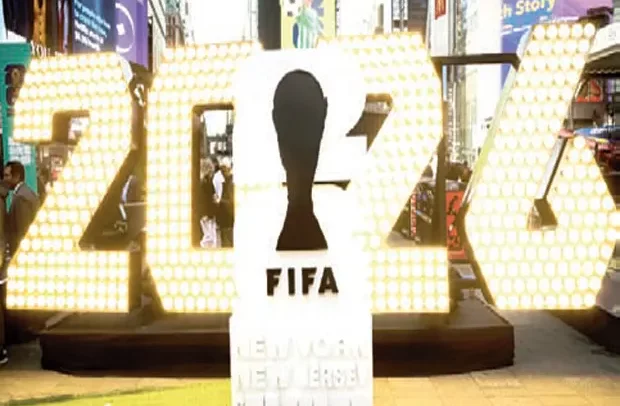






Facebook
Twitter
Pinterest
Instagram
Google+
YouTube
LinkedIn
RSS