


By Innocent Samuel APPIAH
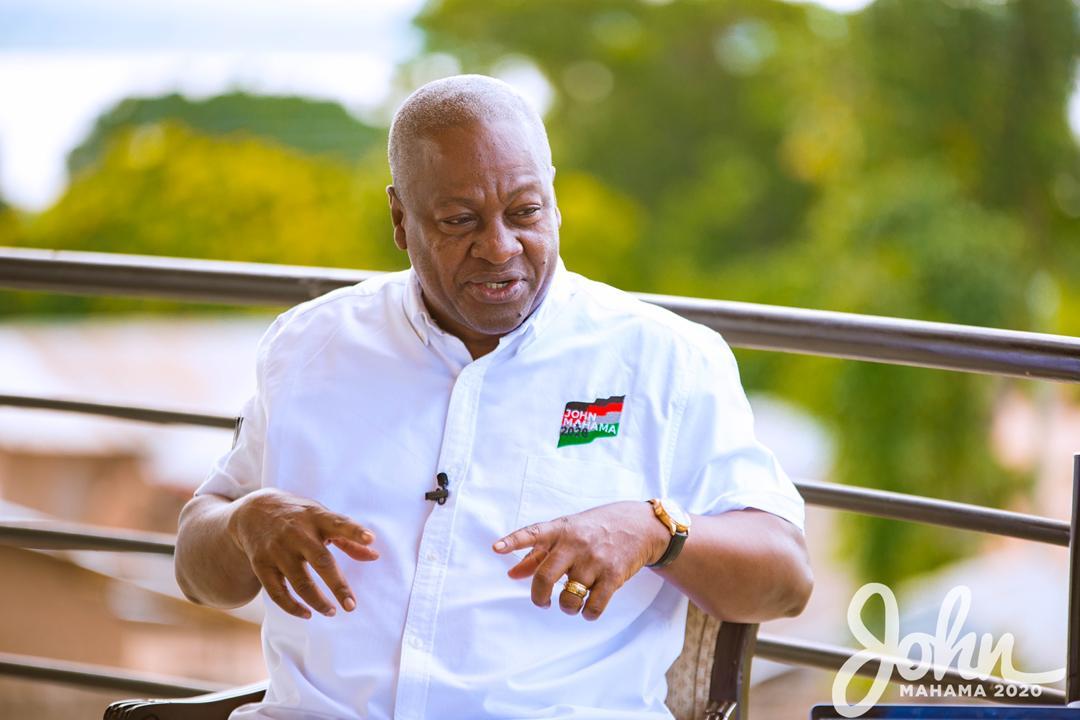
More than six decades after independence, a visionary leader, President John Mahama, envisioned domestic gold refining, and helped in the landmark agreement that has come to fulfil a post-colonial promise and honour the pan-African legacy that bound Ghana and Egypt together.
On a fine morning in Accra, as Sammy Gyamfi, CEO of the Ghana Gold Board (GoldBod), appended his signature to one of Africa’s most consequential resource agreements, he was not merely signing a contract. He was completing a historical act that had stretched over six turbulent decades – a journey that began with a dream, was interrupted by a coup, and has now finally reached fruition under President John Dramani Mahama’s visionary leadership.
The story of Ghana’s gold refining ambition began not in 2026, but in the heady days of independence, when a young nation’s leader dared to imagine that Africa could capture the full value of its own resources. That leader was Dr. Kwame Nkrumah, Ghana’s first President – a Pan-African visionary whose ambitions extended far beyond mere political independence to encompass economic sovereignty and industrial transformation.
The visionary who came too early
In the 1950s and 1960s, when most African nations were content to serve as raw material suppliers to the industrialised world, Dr. Nkrumah possessed a revolutionary conviction: Ghana should not merely extract gold and ship it abroad. Ghana should refine it, process it and capture the full value chain domestically. It was an idea that was simultaneously obvious and radical—obvious because the logic was irrefutable; radical because the colonial order had been designed to prevent precisely this kind of economic self-determination.
Dr. Nkrumah’s vision extended to Ghana’s Western Region, where he envisioned establishing a modern gold refinery that would transform Ghana from a colonial extractive economy into an industrialising nation. The dream was bold, the commitment was real and the potential was transformative. Had the refinery been completed, Ghana would have entered the 1970s as Africa’s premier gold processing hub, commanding not just the wealth of gold extraction but the added value of refining, employment and industrial capacity.
But history had other plans. In 1966, while Nkrumah was abroad, a military coup orchestrated by Ghanaian military and police officers led by Col. Emmanuel Kwasi Kotoka and Police Inspector-General J. W. K. Harley, with backing from the U.S. C.I.A. overthrew his government. The ambitious industrialisation programme was abandoned. The refinery project was shelved. And for the next five decades, Ghana would watch its greatest natural resource flow out of its borders in unrefined form, enriching foreign capitals while the nation extracted mere pennies on every dollar of value created.
It was a tragedy not merely of lost opportunity but of interrupted vision—a nation prevented from realising its own potential by the violent interruption of a leader whose imagination had outpaced his era’s political circumstances.
A half-century of lost potential
For more than sixty years, the refinery dream lay dormant. Successive governments extracted gold, negotiated with mining companies, collected taxes; but never seriously revisited Dr. Nkrumah’s fundamental conviction that Ghana should refine its own gold. The reasons were consistent across administrations: lack of capital, insufficient technical expertise, uncertainty about market access, the comfort of colonial-era arrangements that had simply become normalised.
Generations of Ghanaians watched their nation’s greatest treasure leave in unrefined form. Refining fees that could have been measured in hundreds of millions of dollars flowed to Switzerland, Turkey and South Africa. Young Ghanaians who might have found employment in domestic refining instead emigrated or sought work in foreign facilities. Tax revenues that could have strengthened Ghana’s fiscal capacity went to enhance foreign treasuries. The structural inefficiency became so entrenched that few even bothered to question it.
Yet the dream never died. It persisted in the background of Ghana’s national consciousness—a reminder of roads not taken, of a nation that had been prevented from becoming what its resources and vision entitled it to become.
The Egypt connection: Pan-Africanism renewed
There is a profound symbolism in the fact that the entity finally breaking this over sixty-year drought is Gold Coast Refinery—a company with Egyptian roots. That connection carries echoes of Ghana’s Pan-African heritage, particularly the deep relationship between Dr. Nkrumah and Egypt that transcended politics and extended into his personal life.
In 1957, in a gesture that symbolised the unity of African nations, Dr. Nkrumah married Fathia Ritzk, an Egyptian woman whose father was an Egyptian diplomat. The marriage was not merely personal; it was continental. It represented Dr. Nkrumah’s conviction that Africa’s future lay in solidarity, cooperation and shared purpose among African nations. At a time when European powers were still carving up the continent, Dr. Nkrumah and his Egyptian wife embodied a vision of pan-African partnership that transcended borders and colonial legacies.
Now, nearly seventy years later, an Egyptian refining company stands at the centre of fulfilling the economic vision that Dr. Nkrumah and his Pan-African allies envisioned. Gold Coast Refinery, partnered with Rand Refinery of South Africa, brings to Ghana not merely capital and technology but a tangible manifestation of the continental cooperation that Dr. Nkrumah championed. In this sense, the agreement carries a symbolic weight that extends far beyond commercial terms—it represents African nations finally working together to ensure that African resources benefit African people.
The irony is not lost on those who study Ghana’s history. The Pan-African marriage that Dr. Nkrumah entered in 1957 symbolised a vision of continental solidarity. The refinery agreement of 2026 actualises that vision through economic partnership. It is as though history is completing a circle interrupted by a coup six decades ago.
Mahama’s strategic completion
Yet while history provides the context, contemporary leadership provides the execution. President Mahama’s role in bringing this vision to fruition cannot be overstated. He did not merely inherit Nkrumah’s dream; he actively worked to realise it by creating the conditions for domestic refining to flourish.
During his presidency from 2012 to 2015, President Mahama oversaw the commissioning of Gold Coast Refinery itself—the very facility that would eventually become the centerpiece of this landmark agreement. That decision, made over a decade ago, was not incidental. It reflected a conviction that Ghana’s future lay in value addition, that the nation possessed the capacity to process its own gold, and that domestic refining would eventually become the cornerstone of Ghana’s gold sector transformation.
When President Mahama articulated his vision in 2025 that “Ghana must move beyond extraction to value addition, beyond export volumes to value maximisation,” he was not creating new doctrine. He was reviving and updating the fundamental principle that had animated Nkrumah’s industrialisation drive. The difference is that he (Mahama) has the institutional capacity, the international partnerships and the political consensus to actually deliver what Dr. Nkrumah could only envision.
The irony is delicious: it took President Mahama’s return to the presidency in 2025 to finally consummate the agreement that would operationalise the refinery his previous administration had commissioned. The trajectory from vision to implementation, from commissioning to utilisation, spans the political arc of his leadership.
Sammy Gyamfi’s executive vision
Behind every historic agreement stands a capable technocrat willing to translate political vision into operational reality. In this case, that person is Sammy Gyamfi, CEO of the GoldBod, whose intellectual rigour and strategic acumen have transformed what could have remained a dormant facility into the centerpiece of Ghana’s economic transformation.
Mr. Gyamfi’s first act upon assuming leadership was to review Ghana’s existing refining infrastructure—and to ask the obvious question that nobody had asked in decades: why was Ghana commissioning a refinery while simultaneously exporting raw gold? The question should have been obvious. Yet it took Mr. Gyamfi’s clarity of vision to articulate it and his institutional authority to act upon it.
The agreement he has negotiated with Gold Coast Refinery and Rand Refinery does far more than establish a commercial relationship. It completes Dr. Nkrumah’s interrupted vision, operationalises President Mahama’s strategic commitment and establishes the institutional framework for Ghana to finally capture the full value of its gold resources.
The symbolic weight of February 1, 2026
When gold refining operations commence on February 1, 2026, it will mark more than a commercial milestone. It will represent the moment when a nation finally reclaims sovereignty over its own resources, when a vision interrupted by a coup is finally realised, and when a pan-African dream—embodied in a marriage between a Ghanaian president and an Egyptian woman seven decades ago—is actualised through contemporary economic partnership.
For Ghanaians, it will be a moment to remember Nkrumah’s interrupted vision, to honour President Mahama’s strategic persistence and to recognise Mr. Gyamfi’s executive excellence. It will be the moment when Ghana finally answers the question that should have been answered in 1966: if you possess gold, why should you not refine it yourself?
The dream has been ‘a long time coming,’ but it is finally here. This milestone is not just a destination; it signifies the dawn of a new era for Ghana’s gold sector. Together, we are paving the way for innovation, growth and unrivalled opportunities that will shine brightly on the global stage. Let us embrace this moment and transform our vision into a brilliant reality.
The post From Nkrumah’s dream to Mahama’s reality appeared first on The Business & Financial Times.
Read Full Story



Facebook
Twitter
Pinterest
Instagram
Google+
YouTube
LinkedIn
RSS