


By Ernest Bako WUBONTO
Ghana has failed to break into the top five English-speaking countries on the continent, despite its long-standing reputation as a West African education hub and its self-proclaimed status as the gateway to Africa.
The country’s standing in the 2025 English Proficiency Index (EPI), when viewed alongside a recent government directive promoting mother-tongue instruction, has placed its linguistic development at a critical crossroads, raising fresh questions about how best to balance language policy, educational outcomes and global competitiveness.
As one of the first countries in West Africa to be colonised by Great Britain and the first to gain independence, English became Ghana’s official language, just like all other colonised states that adopted languages of their colonial masters.
Ghanaian scholars take pride in speaking what they consider impeccable English on the continent, often regarded as closest to the British accent, and sometimes make light of other English-speaking countries in Africa, particularly when commenting on their accents.
However, the 2025 ‘English Proficiency Index (EPI)’ ranking released by Education First (EF), placed Ghana sixth on the continent, tailing rival neighbour Nigeria, Zambia, Kenya, Zimbabwe and South Africa.
Interestingly, this has been Ghana’s best performance with a score of 540, ranking 36 globally out of 123 countries, placing it in a ‘moderate proficiency’ status while Nigeria, 29th, falls within ‘high proficiency’ status.
English proficiency is crucial for a country’s economic growth, innovation and global competitiveness, acting as a key driver for international trade, foreign investment and access to knowledge. A proficient workforce improves communication with global markets, attracts high-value industries and enhances overall productivity and development.
“Countries and organisations that invest in English training are essentially investing in their own growth. A workforce that can communicate effectively in English is more flexible, more innovative and more outward-looking. These are the qualities that drive economic progress in the modern world,” Dr. Christopher McCormick, CAO at EF Corporate Learning, has said.

Strong reading, weak speaking and uneven progress
A breakdown of the 2025 data reveals Ghana’s specific challenges. The nation’s strongest skill is reading, a reflection of its exam-focused education system.
However, its weakest is speaking, a deficit that exposes a gap between understanding the language and using it confidently in real-time conversation.
Learners are generally well trained to interpret texts, answer comprehension questions and engage with written materials, making reading a key national strength that supports performance across subjects.
However, speaking remains Ghana’s weakest skill, exposing a persistent gap in productive language use. Many learners may understand English well but struggle to express themselves confidently in real-time conversation due to limited fluency, pronunciation challenges and insufficient classroom opportunities for oral practice.
The report also highlights unequal exposure to English across locations. While Accra performs above the national average, benefitting from better-resourced schools, stronger professional usage and more frequent daily interaction in English, less urbanised areas face fewer opportunities for practice.
A promising sign is that the 21–25 age group shows the highest proficiency, suggesting gradual improvement through better education and digital exposure.

Ghana’s English proficiency outlook
At the higher education level, Ghanaian universities are considered among the best on the continent and are home to students from different nationalities across the continent, especially West Africa.
For instance, a glance at the University of Ghana’s website today found this: “At present, international students number close to 1,500 students, drawn from over 71 countries. We’re proud to be able to say that UG is one of the best universities in Africa.”
But at the basic level, usually described as the formative stages, literacy and numeracy challenges persist, especially those at the periphery of the regional and district capitals.
An estimated 70 percent of children globally in 2024, particularly in low- and middle-income countries (LMICs), including Ghana, are unable to read and understand simple text, an indication of a weak foundation.
Education Minister’s directive for mother tongue usage vs national policy
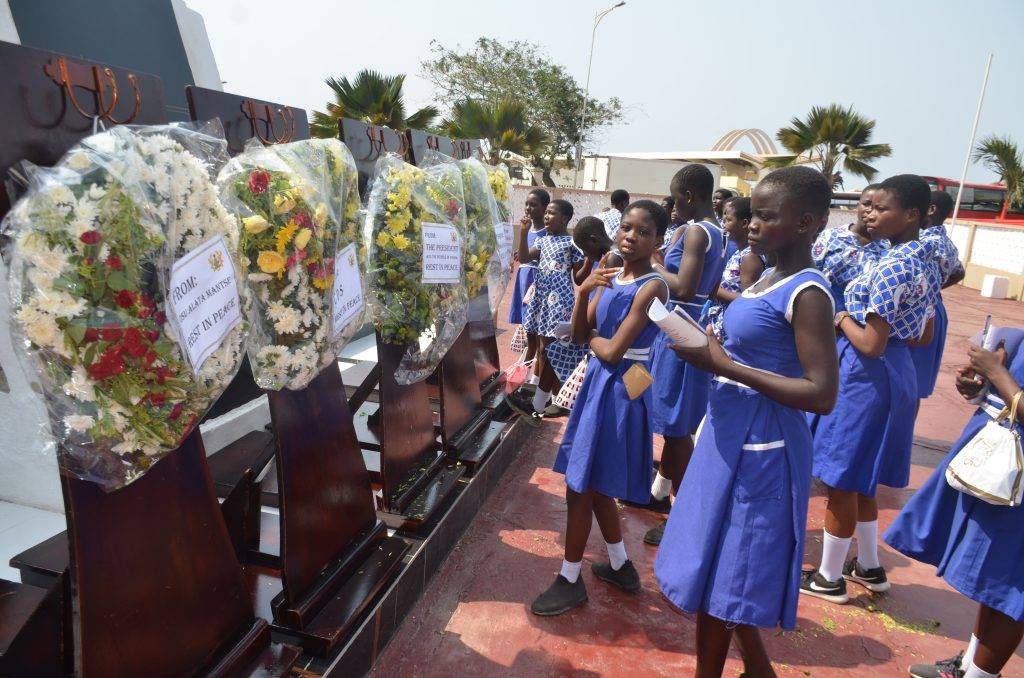
In October 2025, Education Minister Haruna Iddrisu announced the compulsory use of mother tongue as the primary language of instruction in public basic schools.
While aligned with an existing national language policy, the directive extends the use of local languages through Grade Six.
The move has divided experts’ opinions. Proponents argue that early literacy in a child’s first language creates a stronger foundation for learning English later. Critics warn it could widen the existing speaking gap in English if not implemented with meticulous planning and resources.
The latter argues that the core challenge is execution. Many teachers are not native speakers of the local dialect used in their assigned schools.
The language policy in schools demands that learners are taught in their local dialect as a medium of instruction, while the English language is taught as a subject from kindergarten (KG) to Grade three.
Then, from grade four, the English language is used as a medium of instruction while the Ghanaian language is taught as a subject. But with the new directive, the mother tongue will dominate until Grade six.
If mother tongue usage is implemented in ways that reduce structured opportunities for English speakers, the existing speaking gap could widen. Currently, most kids in urban settlements are bilingual in local dialects speaking but cannot read or write any. While they can write and read the English language but not very fluent with self-expression, especially those in public schools.
Learners may continue to read and understand English, but struggle even more to speak it fluently. This would create students who perform well in written examinations but face difficulties in interviews, workplace collaboration, presentations and professional communication.
While various studies made a strong case for introducing the learners first to their local dialect before exposing them to English as a second language (L2), the difficulty has been getting highly qualified teachers to man the early childhood department to implement the policy effectively.
A recent report by the Africa Education Watch (Eduwatch) titled “Teacher Deployment in Ghana’s Basic Schools: Reviewing Progress (2022-2025)” showed that the Pupil-Teacher Ratio (PTR) targets 31:1 at KG, 31:1 at primary, and 11:1 at junior high school (JHS) have been missed.
The three-year medium-term report recorded a PTR of approximately 45:1 at KG, 39:1 at Primary, and 20:1 at JHS, all significantly above target levels; an indication of the teacher inadequacy in the country, especially rural communities where teachers sometimes are reported to abandoned post or refuse posting.
Convener of the Campaign Against Privatisation and Commercialisation of Education (CAPCOE) in Ghana, Richard Kovey Kwashie, highlighted that in cosmopolitan areas where the L1 varies from child to child in the same class, the learners who cannot speak and understand the local dialect adopted by the teacher in the class as a medium of instruction are found wanting and more confused.
“It also means the teacher must use the L1 and L2 side by side while introducing real objects that the learners can associate with to improve their vocabulary and also to enhance their comprehension and retention,” he said.
“This ordinarily would call for redeployment; but again, we don’t have enough Early Childhood Education facilitators to occupy all the classrooms across the country,” Mr. Kovey highlighted.
There is also a need to redesign the KG blocks with modern facilities to depict the home, market, workplace and natural environment, thereby enhancing learning, confidence-building and vocabulary acquisition to promote English proficiency.
Lecturer, University of Cape Coast and Executive Director, Institute for Education Studies (IFEST), Peter Anti Partey, PhD., emphasised that Ghana’s 36th place rank out of 123 countries globally, placing it in the moderate proficiency band, shows that English competence in the country is generally functional and reliable, especially in education and formal professional settings where English dominates.
However, the ranking also indicates that Ghana has not yet achieved the high proficiency levels linked to stronger global competitiveness and advanced communication demands.
The real challenge: Managing transition and building fluency
“The EF EPI 2025 data points to a critical policy lesson: Ghana’s challenge is not choosing between mother tongue and English, but designing a well-managed transition that builds strong foundations while strengthening English proficiency, especially in speaking and writing,” Dr. Partey said.
He argued that the country needs a language pathway that begins with mother tongue instruction for early literacy and conceptual clarity, followed by structured English bridging, and then sustained, speaking-focused pedagogy through upper primary and junior high school.
Accra’s strong performance reflects the advantage of the environment and exposure. If the mother tongue directive is implemented unevenly, without adequate teaching materials, trained teachers and clear bilingual strategies, regional disparities could deepen.
Urban learners may continue to develop English speaking skills through exposure, while learners in less advantaged areas fall behind because their opportunities to practise English productively remain limited.
Making conscious efforts to bridge these gaps could also be of immense help in improving English language proficiency.
“Reading competence is a national strength, but speaking remains the missing link. If Ghana is to move from “moderate” to “high” proficiency performance status, then the priority must be clear: protect the benefits of mother tongue instruction in early learning, while pairing it with deliberate strategies that expand English speaking and writing across the education system,” Dr. Partey argued.
While one school of thought believes the minister’s directive may be a hindrance to the country’s performance in the near future and the other thinks otherwise, the goal is not to abandon Ghanaian languages or diminish their value, but to ensure bilingual education becomes a bridge, not a barrier, to full English competence.
Moving forward
The Ministry of Education and the Ghana Education Service must set clear proficiency benchmarks and track progress.
To advance, the report recommends that it calls for a shift from rote memorisation to communicative teaching methods, where successful communication is rewarded over grammatical perfection.
Schools are also encouraged to create more opportunities for spoken English through clubs, events and exchanges. Crucially, the report stresses that English must be taught only by teachers proficient enough to instruct in it.
The ultimate aim is to ensure bilingual education serves as a bridge to full English competence, enhancing Ghana’s foundational strengths without sacrificing the fluency required for global engagement.
The post English proficiency advancement at crossroads: Ghana grapples with literacy gaps and language policy shifting appeared first on The Business & Financial Times.
Read Full Story






Facebook
Twitter
Pinterest
Instagram
Google+
YouTube
LinkedIn
RSS