


As Ghana gears up for its 2027 local elections, a new study has raised alarm over the persistent violence against women in politics, which continues to hinder democratic participation at the local level.
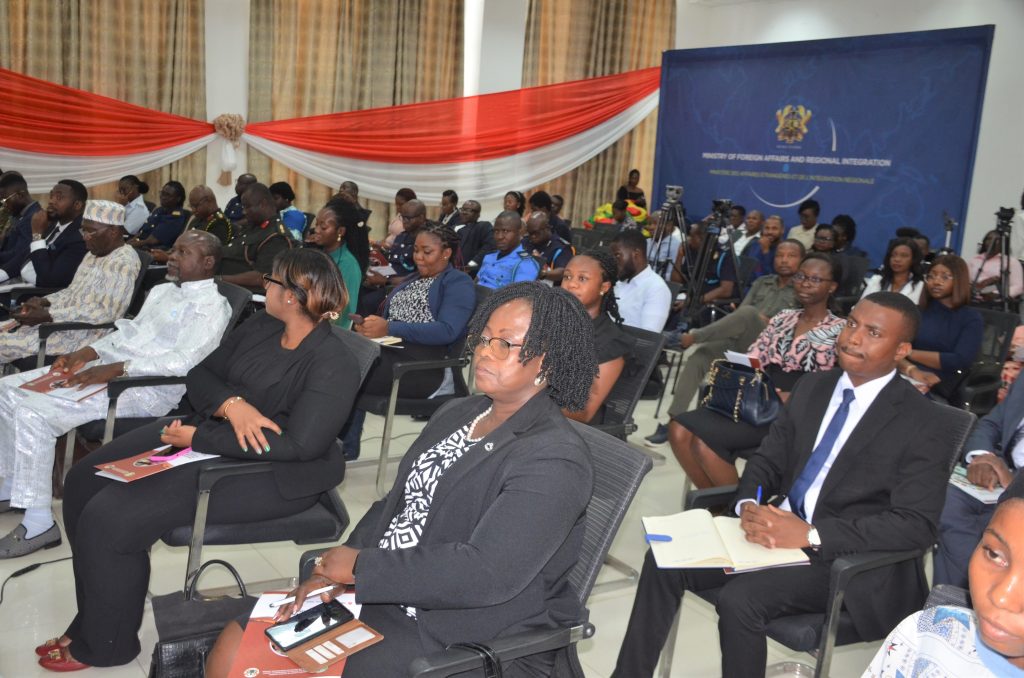
At a joint roundtable hosted by the United Nations Development Programme (UNDP) Ghana and the Nordic Africa Institute (NAI), researchers, policymakers, development partners and members of the diplomatic community convened to examine structural barriers to women’s political participation and identify strategies for safer, more inclusive local governance.
Senior Researcher Diana Højlund Madsen shared findings from the newly published book Making Politics Safer – Mitigating violence against women in politics in Africa: insights from Ghana, Kenya and Zimbabwe, released in NAI’s Current African Issues series.
Drawing on 134 interviews with politically active women, the research highlights how female politicians face physical, sexual, psychological, economic, and symbolic violence designed to deter their participation and maintain male-dominated political systems.
“In Ghana, only 4.1 per cent of district assembly members are women. If we want inclusive local governance, we must look not only at how to bring women into politics, but at the conditions under which they participate,” Diana Højlund Madsen noted.
She added that “Violence and intimidation are not isolated incidents. They are structured obstacles that shape who is able to stand for office and remain in politics.”
The research shows that gendered electoral violence takes many forms, including sexualised harassment, threats against family members, moral accusations and online abuse. While gender quotas and policy reforms have improved women’s numerical representation in some contexts, the study argues that representation alone is insufficient if political environments remain unsafe.
Complementing the comparative research research from Ghana, Kenya and Zimbabwe, UNDP Ghana shared findings from its work on women in local governance and peacebuilding, focusing on the experiences of women in northern Ghana.
The findings highlight both structural barriers and the resilience strategies women employ to navigate political and peacebuilding spaces.
UNDP also presented its assessment of women and youth participation in local governance in selected northern districts, underscoring that despite Ghana’s commitments to international frameworks such as CEDAW and UN Security Council Resolutions 1325 and 2250, effective participation remains limited.
Addressing participants, the Ambassador of Denmark to Ghana, H.E. Jakob Linulf, underscored the importance of evidence-based policy and international partnership in advancing gender equality and democratic resilience.
“We are proud to support this important work and to see the depth of research and results being shared today. The challenges facing women’s participation in political, economic and everyday life are not unique to Ghana or Africa — gender inequality is a global concern.
“Women must participate fully in society; without their equal involvement, sustainable development is not possible. This is about dignity and rights, but it is also about economic progress and conscious, inclusive development across all sectors, from education and health care to climate action and how we define our societies,” he stated.
UNDP Ghana’s Resident Representative highlighted the democratic stakes of the issue, saying “violence against women in politics is not only a gender equality issue. It is fundamentally a democratic governance issue. When women and young people are excluded, intimidated or silenced, the legitimacy, responsiveness and effectiveness of our institutions are weakened.
“Through our research, partnerships and programmatic support, UNDP is committed to working with national and local actors to create safer, more inclusive political and peacebuilding spaces where women and youth can lead without fear.”
In consolidating findings, Højlund Madsen, emphasised that meaningful progress requires coordinated action across institutions.
“Legal reforms are important, but they are not enough. Political parties, local authorities, election bodies and civil society must work together to ensure that women can participate in politics without fear. Safer politics is not only about protecting individual women , it is about strengthening democracy,” she stressed.
The research initiative Making Politics Safer – Gendered Violence and Electoral Temporalities in Africa, funded by the Swedish National Research Council, provides evidence-based recommendations for governments, political parties, election management bodies, and development partners.
Together with UNDP’s ongoing work in Ghana, these studies call on policymakers to reform political cultures and governance systems to support women leaders and safeguard inclusive democracy ahead of the 2027 local elections.
The roundtable was co-organised by UNDP Ghana and the Nordic Africa Institute at the UNDP office in Accra.
The post New research highlights violence against women in local politics ahead of Ghana’s 2027 elections appeared first on The Business & Financial Times.
Read Full Story



Facebook
Twitter
Pinterest
Instagram
Google+
YouTube
LinkedIn
RSS