


Consider two organisations operating in the same space. The first is well-funded, strategically coordinated across continents, and has been quietly placing the right letters in front of the right heads of state at precisely the right moment. The second is underfunded, frequently operating in isolation, and is often one grant cycle away from shutting its doors.
Now ask yourself which of the two is winning the global battle over women’s rights, and the answer becomes uncomfortable very quickly.
This is the picture that emerges from a new report published by Equality Now, the international human rights organisation that has spent more than three decades tracking the gap between the laws governments promise and the laws they actually enact.
The report, Progress and Backlash: Accountability for the Rights of Women and Girls, is part of the organisation’s long-running Words and Deeds series, which since 1999 has documented the slow, uneven, and frequently reversed march towards legal equality for women and girls worldwide.
I spoke with Deborah Nyokabi, Legal Advisor at Equality Now, about its findings ahead of International Women’s Day. Her account was as precise as it was sobering.
The report’s headline statistic alone should stop us cold. According to the World Bank’s Women, Business and the Law 2026 report, not a single country in the world has yet achieved full legal equality between men and women. Not one. Not after decades of international treaties, United Nations conferences, national action plans, and ministerial pledges.
The gap between what governments sign and what they deliver remains, in many cases, vast.
Deborah Nyokabi points to the family as the most telling measure of this failure. “Inequality is particularly rife in family law, yet there can be no equality in society without equality in the family,” she told me.
A 2024 Equality Now report examining gender inequality in family laws across Africa found that none of the twenty countries under review had attained full equality in the family. The law, as it exists in homes and marriages and inheritance disputes, remains one of the last frontiers where formal commitments to equality dissolve almost entirely.
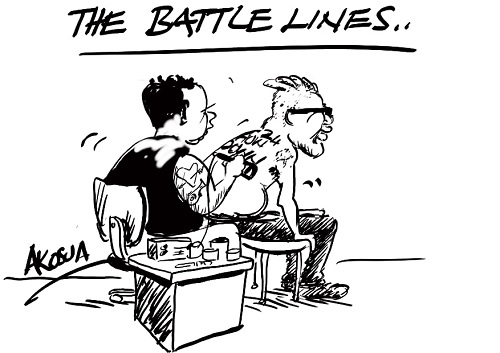
Yet the most striking passage in the new report is not a statistic. Buried within the recommendations section is an observation that reframes everything that precedes it: there is emerging evidence that the anti-rights agenda is well-coordinated and well-funded. The forces working to roll back the rights of women and girls are not a loose collection of reactionaries acting on instinct or cultural anxiety. They are organised. They have resources. And they are winning battles because they are fighting strategically while their opponents scramble for core funding to keep the lights on.
The evidence for this coordination is scattered through the report like a trail of breadcrumbs, and Nyokabi traced much of it in our conversation. Anti-gender actors, she explained, have been convening African members of parliament, religious groups, and lawyers under the auspices of annual Inter-Parliamentary Conferences on Family Values, the Pan African Conference on Family Values, and the African Bar Association conferences held between May 2023 and 2025.
These gatherings, she noted, have resulted in the development of a Draft African Charter on Family, Sovereignty and Values, composed entirely without participation from women’s rights organisations. The charter promotes a narrow model of the “traditional family” and womanhood rooted in rigid, hierarchical gender roles that discriminate against women, girls, and LGBTQ individuals. It disregards diversity in family structures and aims to eliminate essential protections for family life and marriage equality.
The same actors, Nyokabi continues, have been behind the development of draconian anti-homosexuality and family protection bills and laws in countries including Ghana, Kenya, Nigeria, and Uganda. Ghana is set to host the 4th African Inter-Parliamentary Conference on Family and Sovereignty in Accra from 27 to 30 May 2026, where Uganda’s 2023 Anti-Homosexuality Act will be positioned as a model for other African nations, with the aim of bolstering the passage of Ghana’s own Human Sexual Rights and Family Values Bill, which was re-introduced in parliament. The speed at which these bills move through African parliaments, Nyokabi argues, is itself evidence of the financing and transnational organisation behind them.
The contrast with legislation designed to protect women is stark. Ghana’s Human Sexual Rights and Family Values Bill was tabled in 2021 and approved by parliament in 2024, within three years.
Meanwhile, more than three decades after Article 22 of Ghana’s 1992 Constitution mandated parliament to enact spousal property rights legislation, that obligation remains unfulfilled, perpetuating injustices against women and children, particularly in cases of divorce or the death of a spouse. One type of legislation moves at lightning speed.
The other stalls indefinitely.
The institutional infrastructure that women’s rights organisations depend upon is being quietly eroded alongside this legislative pressure. In Senegal, Nyokabi pointed out, President Bassirou Diomaye Faye’s government replaced the Ministry for Women, Family, and Child Protection with the Ministry for Family and Solidarities, diluting the dedicated focus on women’s issues.

In Somalia, Prime Minister Hamza Abdi Barre changed the name of the Ministry of Women Human Rights Development to the Ministry of Family and Human Rights Development, symbolically diminishing the focus on women’s rights in a country where those rights are continually contested. In Panama and Ecuador, similar reorganisations folded women’s ministries into broader departments under the banner of administrative efficiency. In each case, dedicated institutional attention to policies affecting women disappears into a larger bureaucratic structure where it must compete with dozens of other priorities.
At the international level, the picture is no more reassuring. The United Nations remains the central multilateral forum for holding governments accountable on women’s rights, yet it is under severe financial strain. Budget cuts are planned across the system. In January of this year, the United States government directed its withdrawal from sixty-six international organisations, including at least thirty-one UN agencies.
The consequences of that withdrawal are still unfolding.
Equality Now’s report is careful not to present only despair. There are genuine advances documented within its pages. Kuwait amended a provision of its Penal Code that had allowed perpetrators of abduction-related offences to escape criminal accountability by marrying their victims. Kyrgyzstan removed sex-discriminatory restrictions from its Labour Code that had prohibited women from working in more than four hundred job sectors.
Malaysia amended its constitution to give women equal rights to pass citizenship to children born abroad. These are real gains, hard-won through years of advocacy, litigation, and sustained pressure.
But the report’s central argument is that progress and backlash are not occurring on equal terms.
Progress tends to happen incrementally, through legal reform, litigation, and sustained civil society pressure. Backlash, by contrast, is increasingly systematic, strategic, and well-resourced. It knows how to use the language of cultural sovereignty, parental rights, and family values to neutralise opposition before it can organise. It knows how to introduce model reservations to treaties and how to rebrand the removal of rights as the restoration of freedom.
The response, as Equality Now argues, cannot be piecemeal. It requires coalition-building across traditional boundaries, bringing together bar associations, academics, civil society groups, and private sector actors who do not usually think of themselves as participants in the women’s rights movement. It requires core funding for organisations rather than short-term project grants that leave no capacity to respond when a crisis emerges.
There is something both clarifying and deeply unsettling about framing this struggle in logistical terms. We prefer to think of equality as a moral argument that eventually wins on its merits. The history recorded in reports like this one suggests otherwise. Moral arguments require institutions to give them force, and institutions require resources to sustain them. What Equality Now’s latest update documents is not simply a culture war. It is a competition between two movements with very different levels of access to money, legal expertise, and strategic coordination. Until that imbalance is addressed with the same seriousness as the legal arguments themselves, the scoreboard will remain exactly where the World Bank found it in 2026. Stuck at zero.
Bridget Mensah is a PR, Marketing and Communications professional and General Secretary of the Network of Women in Broadcasting (NOWIB). A dedicated feminist and advocate for women in media, she champions workplace excellence whilst empowering voices and building bridges across the industry. She can be reached via email at [email protected] Mensah is a PR, Marketing & Communications professional and General Secretary of the Network of Women in Broadcasting (NOWIB). A dedicated feminist and advocate for women in media, she champions workplace excellence whilst empowering voices and building bridges across the industry. Bridget is passionate about amplifying women’s stories and driving positive change in Ghana’s media. She can be reached via email at [email protected]
The post Her Space with Bridget MENSAH: The coordinated push to roll back women’s progress: A global battle for equality appeared first on The Business & Financial Times.
Read Full Story



Facebook
Twitter
Pinterest
Instagram
Google+
YouTube
LinkedIn
RSS