


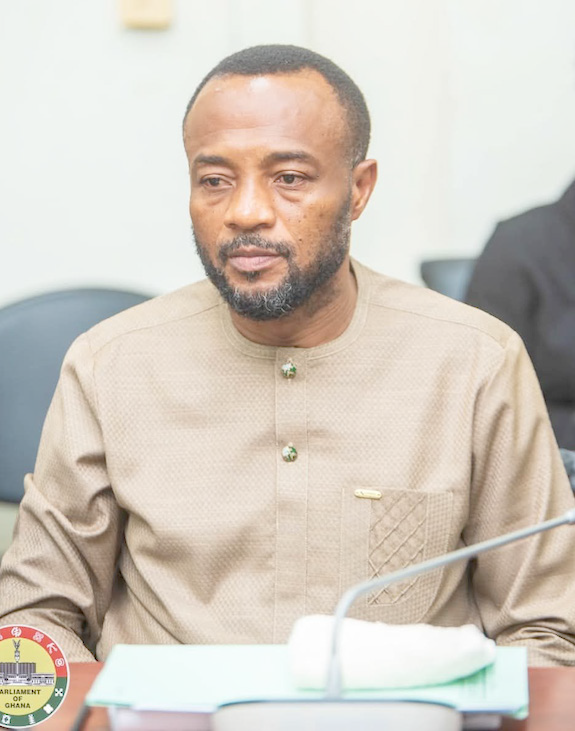
The Chief Executive Officer of the Ghana Gold Board (GoldBod), Sammy Gyamfi, has rejected claims that the Gold-for-Reserves Programme has resulted in losses of about US$214 million, insisting that the International Monetary Fund (IMF) never stated that the Gold Board made losses.
Speaking on TV3 in response to public debate triggered by the IMF’s country report, Mr. Gyamfi said the impression being created that GoldBod had incurred losses and was avoiding accountability was false.
“The impression is being created by some as to the Gold Board has made losses and is shying away from acknowledging that it has made losses,” he said.
He stressed that GoldBod is not a commercial venture established to make profits, but a strategic institution mandated to support foreign exchange generation and gold reserve accumulation for the country.
“The Gold Board is not a typical commercial venture established for the main purpose of making profits. The Gold Board is a strategic corporation with two objects, foreign exchange generation for the country and supporting gold reserve accumulation by the Bank of Ghana.”
Mr. Gyamfi stated emphatically that the IMF did not say the Gold Board had made losses, contrary to how sections of the public discourse had framed the issue.
“So the IMF has not said the Gold Board has made losses. And it is important that we put that matter to rest.”
According to him, GoldBod, which is barely eight months old, has not recorded losses since it assumed operations and has rather posted surpluses, with its financial statements published as required by law.
“For the first year that the Gold Board has been in operation, our financials are available. We have not made losses. We have rather made surpluses.”
Mr. Gyamfi explained that the Gold Board Act deliberately avoids the language of profit and loss because the institution is mandate-driven.
“If you look at the Gold Board Act, nowhere in the Act is the word profit used; rather the word surplus is used. We are mandate-driven and not necessarily profit-driven.”
He added that even if losses were incurred in executing the Board’s mandate, GoldBod would not shy away from accounting for them.
“And so if we even make losses in the discharge of our mandate, we’ll be very happy to consider and to show how that loss came about.”
Addressing claims that the Bank of Ghana was avoiding accountability, Mr. Gyamfi described such suggestions as unfounded, pointing out that the central bank has a history of declaring significant losses.
“The Bank of Ghana has been making consecutive losses. In 2022, it made a loss of 60.8 billion. In 2023, it made a loss of 10.5 billion. In 2024, it made a loss of 9.4 billion.”
He questioned why the Bank of Ghana would attempt to conceal a smaller loss figure attributed to the Gold-for-Reserves Programme.
Mr. Gyamfi explained that the Bank of Ghana had informed the IMF of accounting and financial reporting issues surrounding the Gold-for-Reserves Programme and had referred those issues to its external auditors.
“There are critical issues of financial reporting and accounting treatment principles for the financials surrounding the Gold-for-Reserve programme that the Bank of Ghana has discussed with the IMF.”
He said disagreements over how certain items should be treated in the financial statements could significantly affect the reported profit or loss figures.
Mr. Gyamfi said the Domestic Gold Purchase Programme, which began in 2022 and was inherited from the defunct Precious Minerals Marketing Company (PMMC), was never designed to make profits.
He recalled that at the launch of the programme, government directed that gold be purchased at spot price, a pricing approach that makes profit impossible once handling, insurance, freight, and commission costs are considered.
He warned that pricing gold with the aim of breaking even or making profit would worsen smuggling and deprive the country of foreign exchange.
“So to say that you want to make profit means you have to buy gold at a minimum five per cent discount.”
He cited the introduction of a three per cent withholding tax in 2023, which he said contributed to the lowest gold output in Ghana’s history due to increased smuggling.
Even if the IMF’s estimated cost figure were accepted, Mr. Gyamfi argued that the economic benefits far outweighed the cost.
“If Ghana went to the Eurobond market to borrow $10 billion, we would be paying interest of no less than 10 per cent.”
He maintained that the programme helped stabilise the cedi, reduce inflation, and lower food prices, outcomes he said could not be ignored in assessing the initiative.
Mr. Gyamfi said external audits of GoldBod’s accounts, expected to be completed next year, would provide final clarity on the financial position of the programme.
Until then, he urged the public to distinguish between policy costs incurred by the Bank of Ghana and the financial performance of the Gold Board itself.
The post Gold Board Has Not Made Any Losses — Sammy Gyamfi appeared first on The Ghanaian Chronicle.
Read Full Story






Facebook
Twitter
Pinterest
Instagram
Google+
YouTube
LinkedIn
RSS