


Memory, Morality, and the Politics of Ghana’s Democratic Identity
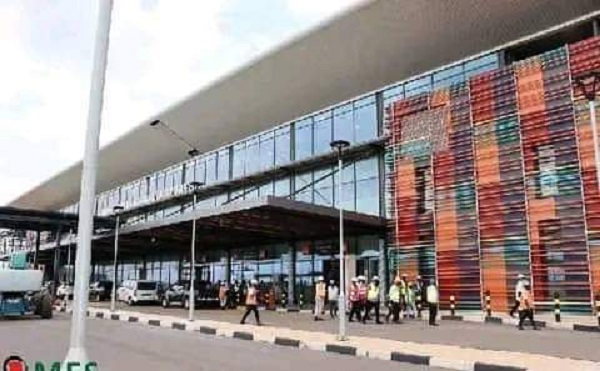
Few public policy decisions in recent times have stirred Ghana’s political nerve centre as deeply as the decision by the John Dramani Mahama administration to revert the name Kotoka International Airport to Accra International Airport. What appears, on the surface, to be a matter of nomenclature is, in truth, a profound national conversation about history, legitimacy, and the moral foundations of Ghana’s democracy.
For decades, many Ghanaians have questioned why the country’s principal gateway to the world bears the name of a man whose most defining historical act was the violent overthrow of Ghana’s first republican government. To them, the continued use of the name Kotoka represents not neutrality, but a quiet endorsement of unconstitutional rule.
The Historical Burden of the Name “Kotoka”
Lieutenant General Emmanuel Kwasi Kotoka was not a passive figure in Ghana’s political history. As Aide-de-Camp to Osagyefo Dr. Kwame Nkrumah, Ghana’s first President, he was among the senior military officers who led the coup d’état of February 24, 1966, toppling the First Republic and installing the National Liberation Council (NLC)—a military junta that ruled without electoral mandate.
This act did more than remove a government; it interrupted Ghana’s constitutional development and inaugurated a cycle of military interventions whose scars remain visible in Ghana’s political memory. Kotoka himself did not die as a constitutional hero. He was assassinated on April 17, 1967, during an abortive counter-coup led by Lieutenant Samuel Benjamin Arthur.
The coup, popularly christened Operation Guitar Boys, also involved other junior officers of the Ghana Armed Forces—Lieutenant Moses Yeboah, believed to have masterminded the killing of Kotoka, and Second Lieutenant Ebenezer Osei-Poku.
It was after this episode that the NLC named Ghana’s international airport in Kotoka’s memory—a decision taken not by a democratic government, but by a military regime seeking to legitimize its own historical narrative. This context matters.
Selective Immortalisation and the Moral Question
The agitation against the name Kotoka International Airport is not rooted in selective amnesia. Ghana’s political history includes other military rulers—Generals Acheampong and Akuffo, and Flight Lieutenant Jerry John Rawlings—each of whom occupies a distinct place in the nation’s historical narrative.
Acheampong is still remembered for his extensive housing initiatives and the popular social intervention programme, Operation Feed Yourself, while Rawlings is credited with steering the country back to constitutional rule and overseeing major road infrastructure projects that linked some of the most remote parts of Ghana to the national grid.
Yet none of these figures has been immortalized through the naming of national symbols of global significance. The closest approximation in recent times is the erection of a Rawlings effigy in Dzelukope (Keta Dzelukope), his maternal hometown—an act of local commemoration rather than state-sanctioned canonisation.
The reason is straightforward: performance cannot cleanse illegality. To immortalize a coup maker—regardless of personal qualities or subsequent achievements—is to blur the moral line between constitutional governance and the violent seizure of power. It sends an ambiguous message to future generations about what Ghana chooses to honour.
Airports, especially international ones, are not neutral spaces. They are symbolic thresholds. They announce to the world who a nation is and what it values.
Democracy, Memory, and the Politics of Reversion
The decision by the Mahama administration to revert the name to Accra International Airport is therefore not an act of historical erasure, but of democratic clarification. It restores neutrality where partisanship of power once prevailed.
Yet, as expected, the move has generated political contestation. Minority Leader Alexander Afenyo-Markin has framed the decision as an affront to the Volta Region, arguing that the removal of Kotoka’s name symbolically diminishes the region’s contribution to Ghana’s history.
This argument, however, collapses under scrutiny. Ghana’s national symbols are not instruments of regional compensation. They are expressions of collective values. To suggest that retaining the name of a coup maker is necessary to honour a region is to reduce national memory to ethnic bargaining—a dangerous precedent in a constitutional democracy.
More strikingly, the internal contradictions within the opposition itself expose the weakness of the politicisation. New Patriotic Party Member of Parliament for Ofoase-Ayirebi, Kojo Oppong Nkrumah, has publicly supported the name change, implicitly acknowledging that the question transcends party lines.
What Is Ghana Choosing to Honour?
At its core, the debate is not about Kotoka the man, but about Ghana the republic. Does Ghana wish to continue projecting a conflicted democratic identity—one that condemns coups in principle but venerates coup leaders in practice? Or does it seek coherence between its constitutional values and its national symbols?
Reverting to Accra International Airport does not deny history. Kotoka’s role remains recorded in textbooks, archives, and scholarly discourse. But history remembered, is different from history celebrated.Democracies do not honour every figure who shaped them—only those whose actions align with their enduring values.
Beyond Politics, Toward Principle
The renaming of Ghana’s international airport is not an act of vengeance, regional bias, or partisan triumphalism. It is a long-overdue act of democratic hygiene. Nations grow not only by building infrastructure, but by clarifying memory. In choosing Accra International Airport, Ghana is not rewriting history; it is correcting the lens through which that history is publicly framed.
In doing so, it sends a clear message—both to its citizens and to the world—that Ghana’s democracy does not merely reject coups rhetorically but refuses to canonise them symbolically. That is progress.
By Richmond Keelson, Ontario, Canada
The views expressed in this article are the author’s own and do not necessarily reflect The Chronicle’s stance.
The post Kotoka or Accra International Airport? appeared first on The Ghanaian Chronicle.
Read Full Story




Facebook
Twitter
Pinterest
Instagram
Google+
YouTube
LinkedIn
RSS