


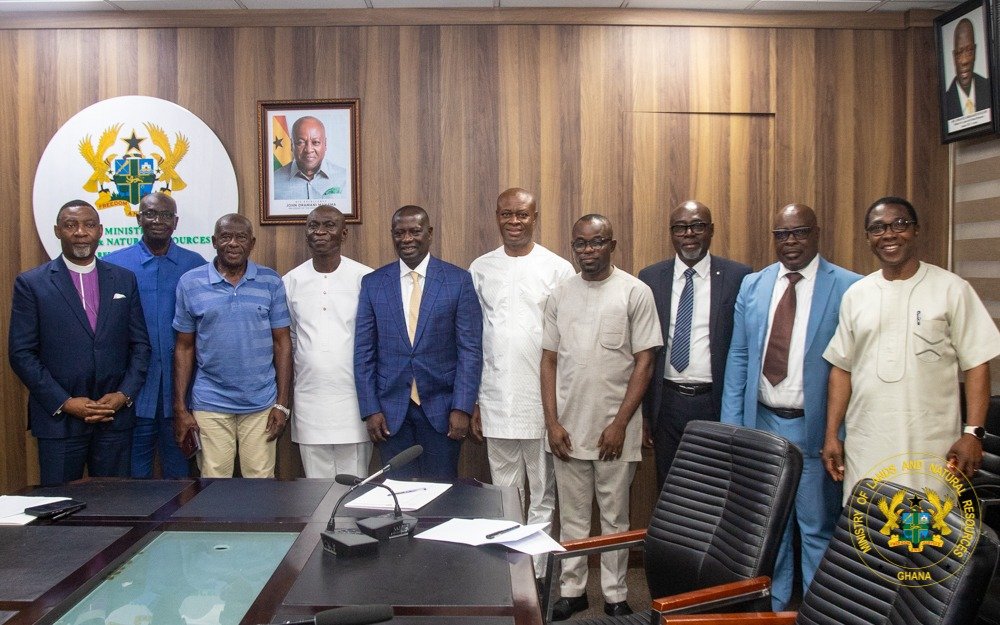
The Deputy Minister for Lands and Natural Resources, Alhaji Yusif Sulenama, has declared that the protection and responsible utilisation of Ghana’s wildlife resources “is not optional, it is a national obligation,” as the government begins nationwide consultations to operationalise the Wildlife Resources Management Act, 2023 (Act 1115).
Addressing stakeholders at the opening of a consultative workshop in Accra on Tuesday, the Deputy Minister described the draft Legislative Instrument (L.I.) as a decisive step toward strengthening enforcement, enhancing transparency and ensuring that conservation efforts deliver both environmental protection and development outcomes.
“The passage of an Act is only the beginning. For the law to be effectively implemented, we require clear, practical and enforceable Regulations,” he said.
He noted that although Act 1115 marked a major milestone in Ghana’s environmental governance framework, its success will depend on the quality of the regulations being crafted to give it full effect.
The Deputy Minister underscored that wildlife resources are ecological, economic and cultural assets that support tourism, livelihoods, biodiversity preservation and climate resilience. However, he warned that these resources are under increasing pressure from illegal hunting, habitat destruction, encroachment, pollution and climate change.
He indicated that the draft L.I. seeks to provide clarity on: Governance and management of protected areas; Procedures for granting permits, licences and concessions; Regulation of wildlife trade and utilisation; Enforcement measures and sanctions and Institutional coordination and Ghana’s international obligations.
Particular emphasis, he said, is being placed on strengthening Community Resource Management Areas (CREMAs) to ensure that communities living around protected areas are recognised as partners not bystanders, in conservation.
“Sustainable wildlife management must go hand in hand with livelihood support, equitable benefit-sharing and respect for traditional knowledge systems,” he stated.
Describing the consultation as a critical stage in policy-making, the Deputy Minister rejected the notion that stakeholder engagement is symbolic.
“This is not a mere formality. It is your opportunity to shape the regulatory framework that will guide wildlife governance in Ghana for years to come.”
He assured stakeholders that all inputs gathered from the Accra session and subsequent regional consultations would be reviewed and integrated where appropriate before the instrument is finalised and submitted for the next processes, including laying before Parliament.
Reiterating the government’s broader environmental agenda including the fight against illegal mining and logging, the Deputy Minister called for collective responsibility in safeguarding the country’s natural heritage.
“Together, let us build a regulatory framework that balances conservation with development, enforcement with participation and protection with opportunity,” he said, before formally declaring the workshop open.
The Chief Director of the Ministry, Innocent Marcus Haligah, urged participants to contribute candidly and technically to ensure that the final regulations are workable and enforceable.
“We will take your views seriously. Together we will identify the gaps and address implementation challenges,” he said, encouraging participants to freely share insights and submit written recommendations where necessary.
He emphasised that effective enforcement will depend on practical provisions that reflect realities on the ground.
Act 1115 replaces the outdated Wild Animals Preservation Act, 1961, which focused largely on preservation and did not adequately address emerging challenges such as illegal wildlife trade, habitat degradation or community participation.
The new law shifts the focus to sustainable wildlife management. It vests wildlife resources in the President, designates the Forestry Commission as the implementing authority and requires that protected areas be established through Legislative Instruments giving Parliament a formal role in the process.
The Act also strengthens penalties for wildlife offences, raising fines to between 250 and 2,500 penalty units, and provides for dismissal and possible prosecution of wildlife officers who aid or abet offences.
The stakeholder consultations are being held under Section 37 of Act 1115, which empowers the Minister to make regulations necessary to fully operationalise the law.
The post Wildlife Protection Is Not Optional But … appeared first on The Ghanaian Chronicle.
Read Full Story










Facebook
Twitter
Pinterest
Instagram
Google+
YouTube
LinkedIn
RSS