


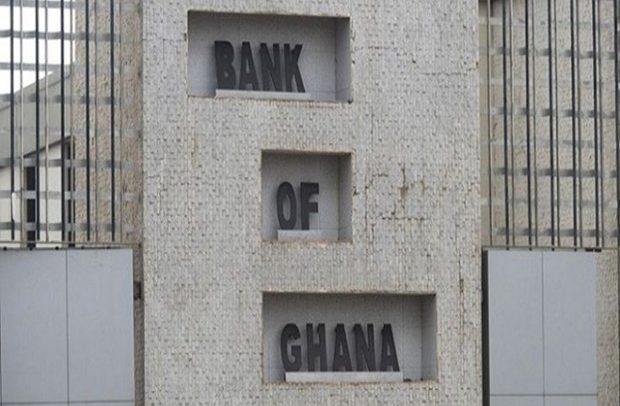
The Governor of the Bank of Ghana, Dr Johnson Pandit Asiama, has outlined a series of strategic measures aimed at gradually strengthening the financial position of the Central Bank, following the economic stabilisation efforts undertaken recently.
The BoG has tabled at least six measures to improve the financials of the Central Bank in the medium term.
Speaking before a parliamentary committee on Economy and Development, the Governor noted that one of the key drivers of improvement will be the gradual repricing of the bank’s earning assets.
He explained that when domestic securities and foreign reserve assets mature, they will be reinvested at prevailing market yields, which are expected to generate stronger investment income for the central bank.
“The natural turnover of the Bank’s asset portfolio will support a gradual recovery in investment income over time,” he said.
The Governor also indicated that improvements in reserve asset management are expected to further strengthen the bank’s income position as global interest rate conditions evolve and returns on foreign reserve assets improve.
Another major factor expected to support the Bank’s finances is the easing of liquidity management costs.
During the period of tight monetary policy, the Bank of Ghana intensified open market operations to absorb excess liquidity in the banking system, which resulted in higher interest expense.
However, the Governor indicated that as inflation continues to decline and policy interest rates gradually normalise, the cost associated with absorbing excess liquidity will reduce naturally.
The central bank is also implementing reforms within the domestic gold purchase programme to reduce operational costs.
According to the Governor, improvements in the programme’s cost structure have already been made and are expected to have a more significant positive impact on the bank’s finances from 2026 onwards.
He added that the government will also partner with the central bank in sharing part of the programme’s operational costs as the initiative evolves into a key national strategy for strengthening the country’s international reserves.
The Governor of the Bank of Ghana further explained that greater exchange rate stability will help limit valuation swings on the bank’s foreign currency assets.
He explained that exchange rate movements can sometimes produce accounting valuation losses when the domestic currency strengthens against foreign currencies.
However, a more stable exchange rate environment is expected to reduce the magnitude of such fluctuations in the Bank’s financial statements.
The governor said these measures are expected to progressively improve the financial position of the Bank of Ghana over the medium term.He noted that despite the financial costs associated with stabilisation policies, the broader economic outcomes have been positive.
Inflation has fallen sharply from above 23 per cent in 2024 to 3.3 per cent in early 2026, while the exchange rate has stabilised and credit growth in the economy is gradually recovering.
“For ordinary Ghanaians, the real measure of this progress is simple: prices are stabilising, the cedi is steadier and the economy is moving back toward normal,” the Governor told the committee.
He assured Parliament that the Bank of Ghana will continue to pursue prudent, disciplined and data-driven monetary policies to sustain macroeconomic stability while strengthening its financial position over time.
WORK DONE
Dr Johnson Pandit Asiama recalled how the economy was suffering when he assumed office and what was done to remedy the situation.
To reverse the trend, he said the central bank adopted a series of aggressive policy measures aimed at restoring macroeconomic stability and rebuilding confidence in the economy.
The governor said the Bank of Ghana maintained a tight monetary policy stance throughout 2025 to bring inflation under control and anchor market expectations.
At the same time, the bank intensified open market operations to mop up excess liquidity within the financial system.
The move was necessary because excess reserves held by commercial banks were weakening the effectiveness of monetary policy transmission.
Measures included increased issuance of liquidity-absorbing instruments, active sterilisation of foreign exchange inflows and closer coordination with the Ministry of Finance on government cash management.
GOLD REVERSES REBALANCED
The central bank also moved to strengthen Ghana’s external buffers, including the expansion of the domestic gold purchase programme launched in 2021.Gold reserves rose significantly from about 8.7 tonnes before the programme to over 40 tonnes by October 2025.
However, the governor revealed that the bank later converted part of its gold holdings into foreign exchange assets to maintain a balanced reserve portfolio.
He stressed that the move did not represent a loss of national assets but rather a strategic diversification measure.
“Gold had come to represent about 42 per cent of our gross international reserves, which created portfolio concentration risk,” he explained.
The post BoG Rolls Out Another Robust Strategy … Domestic Securities And Foreign Reserve Assets To Be Reinvested Upon Maturity appeared first on The Ghanaian Chronicle.
Read Full Story


Facebook
Twitter
Pinterest
Instagram
Google+
YouTube
LinkedIn
RSS