


Finance Minister Dr. Cassiel Ato Forson has rejected suggestions that Ghana’s recent economic recovery is solely the result of the country’s debt restructuring programme and support from the International Monetary Fund (IMF), arguing that policy reforms and disciplined economic management have been the main drivers of stability.
Addressing Parliament during the presentation of the 2026 Mid-Year Fiscal Policy Review, Dr. Ato Forson said the Domestic Debt Exchange Programme (DDEP) and the IMF programme provided important support but could not independently restore economic stability without sound policy implementation.
“Debt restructuring may create fiscal space, but it does not create fiscal discipline,” he said, adding that an IMF programme could provide a framework but could not replace effective economic management.
According to the Finance Minister, Ghana’s recovery had been driven by a deliberate programme of reforms introduced by the government since January 2025 to stabilise the economy and rebuild investor confidence.
Dr. Ato Forson acknowledged the severe impact of the previous debt restructuring exercise, saying domestic and external bondholders, financial institutions, individual investors and pensioners all suffered significant losses from the programme.
He said the restructuring process imposed “crude and painful haircuts” on bondholders, with many individuals losing portions of their lifetime savings.
The Finance Minister said the economic crisis also resulted in business closures, relocation of companies, job losses and increased hardship for households that had previously escaped poverty.
He described the situation inherited by the current administration as a consequence of fiscal indiscipline, excessive borrowing, weak accountability and poor economic management.
Dr. Ato Forson said the experience should serve as a reminder of the need to protect Ghana’s macroeconomic stability and prevent a repeat of the crisis.
He said the government, upon assuming office, moved quickly to implement structural reforms, arguing that the economy required more than temporary adjustments.
“The progress Ghana is recording today did not happen by chance,” he told Parliament, insisting that the gains reflected deliberate policy choices rather than external factors alone.
The Finance Minister said sustaining the recovery would depend on continued fiscal discipline, credible policies and effective implementation of economic reforms.
He maintained that Ghana must learn from the economic crisis and adopt measures that prevent excessive borrowing and fiscal vulnerabilities in the future.
For more news, join The Chronicle Newspaper channel on WhatsApp: https://whatsapp.com/channel/0029VbBSs55E50UqNPvSOm2z
The post Debt Restructuring Alone Did Not Restore Ghana’s Economy —Finance Minister appeared first on The Ghanaian Chronicle.
Read Full Story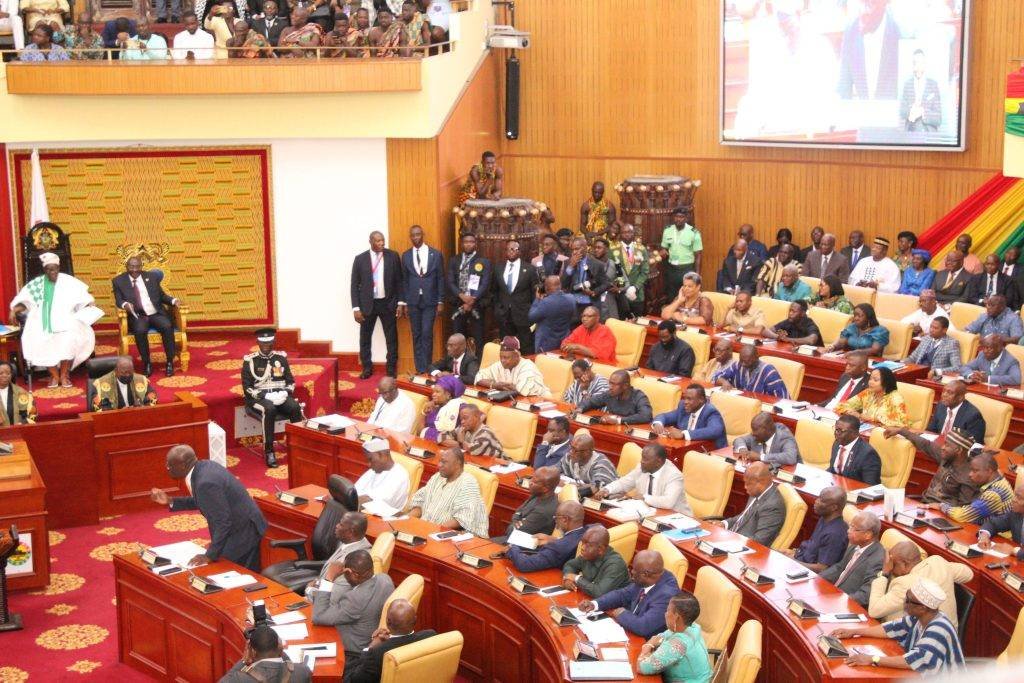


Facebook
Twitter
Pinterest
Instagram
Google+
YouTube
LinkedIn
RSS