


The President of the Western Regional House of Chiefs (WRHC), Nana Kobina Nketiah V, has mounted a strong case for a complete ban on the export of raw rubber, warning that the government’s proposal to merely restrict such exports would weaken domestic industries and undermine Ghana’s broader industrialisation agenda.
According to Nana Kobina Nketiah V, who is also the Paramount chief of Essikado Traditional Area, the continued export of raw rubber, particularly from the Western Region, which remains the country’s major rubber-producing enclave, runs counter to the government’s own policy objectives aimed at value addition, job creation and local content development.
Speaking at a general meeting of the House in Sekondi, on Monday, he said the chiefs were unequivocal in their demand for an outright ban, not a partial limitation, on the export of natural rubber in its raw form.
“It was explicitly stated in the 2026 budget statement, and I took note of it, that the discussion was about natural rubber.
“However, the way the Minister framed it suggested a restriction on the export of raw rubber. We are not asking for a restriction. We are asking for a total ban on the export of raw rubber,” Nana Kobina Nketiah V said.
He explained that a ban would support domestic processing, feed local rubber-based industries and align fully with the government’s own industrial transformation programmes, including initiatives under the One District, One Factory (1D1F) and the 24-Hour Economy policy framework.
It is on record that local processors like Ghana Rubber Estate Limited (GREL) in the western region have been starved of raw material to process as a result of the export of the raw material. Due to that, the company has cut down half of it staff and also reduced its three shift system to one.

One local processor in the central region, according to Association of Natural Rubber Actors of Ghana (ANRAG) for instance, has run aground because of absence of raw material to process. Recently, a parliamentary select committee on Trade and Industry at a tour of local processors in the region threw its weight behind government decision to restrict raw rubber export in 2026.
The committee said it was ready to help government draft the LI and pass it to make export of raw rubber restricted.
But the revered traditional ruler warned that exporting raw rubber not only deprives the country of value-added revenue, but also directly contradicts government’s declared policy direction, while leaving domestic processors starved of critical raw materials.
“Exporting raw rubber directly contradicts the government’s stated policy direction and undermines the domestic industry.
“If we are serious about industrialization, then we must process our rubber here instead of exporting it in its raw state,” the paramount chief said.
Nana Kobina Nketiah V further called for stricter enforcement of existing laws and regulations governing the export of raw materials, stressing that the challenge lies not in the absence of policy, but in weak implementation.
“There are laws against exporting raw materials in their raw form. We must back government and also sit down with them to ensure that the regulatory framework works,” he noted, adding “This is not only to the benefit of the producing areas, but to the benefit of the whole country.”
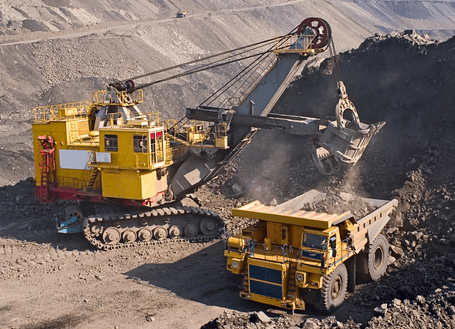
Drawing parallels with the mining sector, Nana Kobina Nketiah V lamented what he described as a long-standing pattern of extracting resources from host regions without commensurate local processing or industrial development.
He cited recent public concerns over plans to site a national gold refinery in Accra, rather than in mining communities in the Western Region, describing such decisions as economically and socially unjustifiable.
“We have heard complaints that a gold refinery is being planned for Accra, while the gold itself is mined here.
“If the aim is to stop illegal mining and create jobs, then we must rationalize why such facilities are not located in the producing regions,” he said.

According to him, the rubber sector presents Ghana with a clear opportunity to correct past mistakes by ensuring that value addition takes place where the raw materials are produced, thereby creating employment, boosting local economies and reducing rural-urban migration.
Supporting the position of the WRHC President, Awulae Angamatuo Gyan, Paramount Chief of Gwira Traditional Area, disclosed that traditional authorities in the region have repeatedly engaged the Ministry of Trade and Industry and the 24-Hour Economy Secretariat, regarding the export of raw rubber.
“As chiefs, we have on several occasions moved to the Ministry of Trade and Industry and also engaged the 24-Hour Economy Secretariat on the issue of raw rubber exports,” Awulae Angamatuo Gyan stated.
He said although successive engagements had not yielded the desired results, chiefs in the region remained hopeful that government’s current indication to restrict raw rubber exports could be a stepping stone towards a full ban.
“We have heard of the exportation of raw rubber for years and have spoken extensively about it. We are now looking forward to seeing how the law will be shaped and how government’s new position will be implemented.”
For his part, Awulae Attibrukusu, also a respected member of the Western Regional House of Chiefs and Paramount Chief of Axim Traditional Area, welcomed government’s decision to begin restricting raw rubber exports, but stressed that the region must adopt a united front to push for a complete prohibition.
“We are glad that government has indicated its intention to restrict the exportation of raw rubber. However, as a region, we must come together and meet the relevant authorities to clearly state our resolve to have a total ban.”
He proposed a collective petition by traditional leaders, opinion leaders and other stakeholders in the Western Region to formally communicate their position to government and Parliament.
“We must move together, write and petition to show our determination to have raw rubber totally banned,” Awulae Attibrukusu added.
The Western Region remains Ghana’s leading producer of natural rubber, with several large plantations and smallholder farmers depending on the sector for their livelihoods. Chiefs in the region argue that banning raw rubber exports will not only stimulate local processing, but also create thousands of direct and indirect jobs, enhance government revenue and ensure sustainable industrial growth.
Present at the General House meeting were; Awulae Amihere Kpanyile III, Paramount chief Eastern Nzema, Tetretteh Okuamoah Sekyim, Paramount Chief of Wassa Akropong and Osagyefo Kwaw Entsie, Paramount chief of Mpohor.
The rest are Obrempong Hima Dekyi, Paramount Chief of Upper Dixcove and Nana Kwesi Agyemang, Paramount Chief of Lower Dixcove among others.
For more news, join The Chronicle Newspaper channel on WhatsApp: https://whatsapp.com/channel/0029VbBSs55E50UqNPvSOm2z
The post W/R House Of Chiefs Demand Total Ban Of Raw Rubber Exports appeared first on The Ghanaian Chronicle.
Read Full Story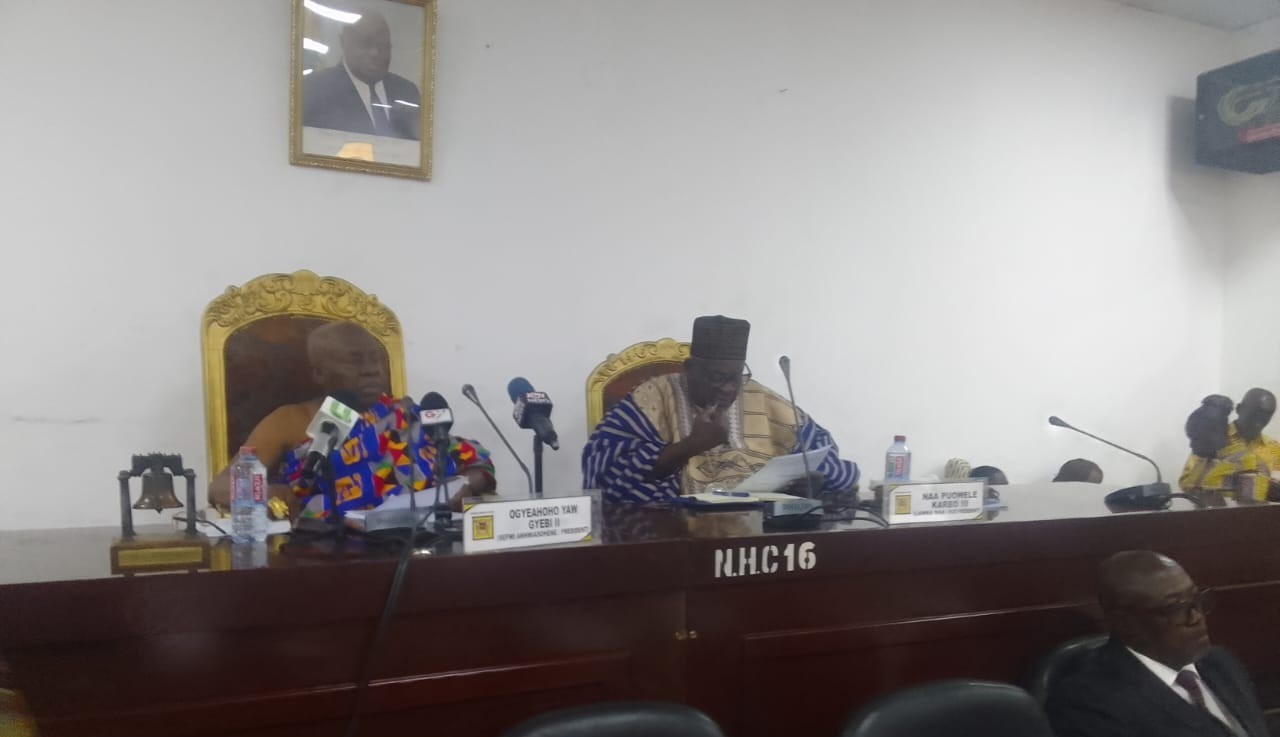








Facebook
Twitter
Pinterest
Instagram
Google+
YouTube
LinkedIn
RSS