

“Raw materials are exhaustible, but human knowledge grows with use. That is the secret of industrial diversification, job creation and prosperity.”
— Professor Calestous Juma, Harvard Kennedy School
A £1.9 million UK Africa partnership has ended where many similar initiatives stall. Not with a stack of reports, but with Ghana’s first fully operational National Research Fund (GNRF) and a functioning innovation policy architecture.
Unlike many previous donor funded science and innovation programmes, which often ended at the level of policy frameworks and pilot schemes, the Sankore Project was designed with a stronger execution focus. Ghana has, over the years, developed several science, technology and innovation policies and strategies, yet implementation has remained uneven, particularly in financing research and linking it to industry.
The National Research Fund itself, though established by law in 2020, remained largely dormant for years. Sankore’s intervention was therefore not to introduce a new vision, but to unlock an existing one by turning policy intent into working systems.
The Sankore Project, funded by the UK’s Foreign, Commonwealth and Development Office and implemented by UNESCO in partnership with Ghana and Nigeria, supported the UK Ghana Science, Technology and Innovation Strategy for 2023 to 2027.
In just 15 months, it helped operationalise the Ghana National Research Fund, strengthened pathways for commercialisation, and established a West Africa wide helpdesk for researchers and government institutions. For a short term intervention, that is a meaningful return.
From shelf to system
Ghana has long trained scientists, produced research, and passed laws to support innovation. Yet too much of that work has remained theoretical, never reaching farms, factories or markets.
The Ghana National Research Fund, established under Act 1056 in 2020 with an initial US$50 million pledge, is now moving from concept to execution. A 13 member governing board was inaugurated in 2025, with the British High Commissioner confirming a formal launch in June 2026 under the UK Ghana Science, Technology and Innovation Partnership.
The economic stakes are considerable. Board Chairman Professor Eric Danquah notes that Ghana spends about US$3 billion annually on food imports, a drain that could be reduced through targeted investment in domestic research and production. Yet national research and development spending remains at roughly 0.3 percent of GDP, well below the African Union’s one percent benchmark.
Innovation without scale
Despite these constraints, Ghana’s innovation ecosystem is producing practical solutions.
Farmsense, developed by KNUST researchers and led by Sesi Technologies with support from Innovate UK’s Knowledge Transfer Partnership and Manchester Metropolitan University, is expected to benefit more than 20,000 smallholder farmers, with plans to scale to one million by 2030.
Another initiative, R-Leaf®, is a patented agrochemical technology developed by Crop Intellect Limited in the United Kingdom. The innovation uses a photocatalyst spray to convert atmospheric nitrogen oxides into nitrate that can be absorbed by crops, offering a novel approach to improving soil fertility.
These examples illustrate a system that can generate ideas with real economic value. Ghana’s start up ecosystem raised 127 million dollars in 2024, a 95 percent increase on the previous year, driven largely by agritech, fintech and healthtech. Yet the critical question remains unresolved: can these innovations move beyond pilot stage into full scale production?
When innovation stalls
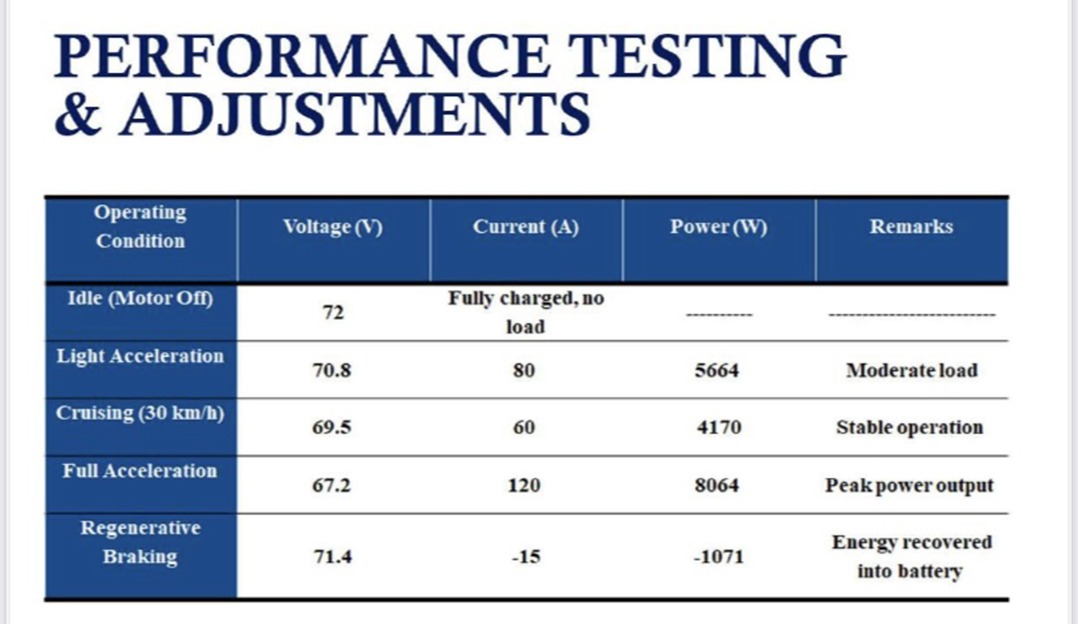
That question is sharply illustrated by a locally engineered electric vehicle developed by students of Kumasi Technical University (KsTU).
The vehicle is fully functional and incorporates regenerative charging tailored to Ghana’s inconsistent power and charging infrastructure. Yet it remains confined to a university laboratory.
Professor Prince Owusu Ansah, the chartered engineer leading the project, is candid about his frustration.
“Having produced this vehicle, nobody has called us. We are waiting, hoping government or the private sector will come in. In a year or two, this vehicle may just sit there, and we will lose motivation.”
The constraints are not primarily technical. Certification processes remain costly and slow. Patent protection pathways are uncertain. At an estimated unit cost of about 70,000 cedis, the vehicle cannot achieve scale without external investment or policy backed demand.
Each stalled innovation carries a cost. It represents lost jobs, missed industrial opportunities, and a gradual erosion of confidence among researchers. The electric vehicle is not just a transport solution left idle; it is a clear signal of a broader structural gap between invention and industry.
Policy is only the beginning
Chisom Udemezue, Technology and Innovation Adviser at the FCDO West Africa Research and Innovation Hub, argues that research commercialisation is central to economic transformation and must be supported by sustained domestic investment.
International experience reinforces this point. South Korea’s globally competitive research institutions emerged from decades of coordinated industrial policy. Rwanda’s progress has been driven by long term national strategies that embedded innovation as a priority.
Ghana now has elements of that foundation. Sankore has helped operationalise the National Research Fund, strengthened policy direction, and deepened international collaboration. But policy alone does not create industries.
The test ahead
The next phase requires execution. Ghana must treat the National Research Fund as a fully functioning domestic instrument, ensure predictable financing, streamline certification processes, and actively connect researchers with industry and investors.
The country already possesses the talent, the policy direction, and early stage innovations that demonstrate potential. What remains uncertain is whether there is sufficient political will to translate these into sustained economic outcomes.
Calestous Juma’s insight remains instructive. Knowledge grows when it is used. When it is not, it loses value along with the confidence of those who produce it.
Professor Owusu Ansah is still waiting for his phone to ring. If Ghana is serious about building a science driven economy, it cannot afford to keep him waiting. Sankore has lit the fire. The responsibility now is to sustain it and build from it.
By Richard Owusu Akyaw
For more news, join The Chronicle Newspaper channel on WhatsApp: https://whatsapp.com/channel/0029VbBSs55E50UqNPvSOm2z
The post Feature: From Ideas To Impact: Sankore Lights Path To Science Led Growth appeared first on The Ghanaian Chronicle.
Read Full Story








Facebook
Twitter
Pinterest
Instagram
Google+
YouTube
LinkedIn
RSS