


Dr. Johnson Asiama
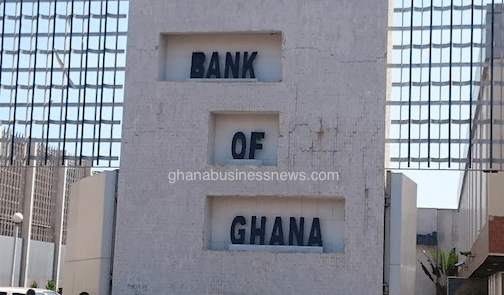
The Bank of Ghana (BoG) has cut its Monetary Policy Rate by 250 basis points to 15.5 percent, citing faster-than-expected disinflation, improved macroeconomic stability and a stronger outlook for economic growth.
The decision, announced at a press briefing in Accra yesterday by the Governor, Dr. Johnson Asiama, signals growing confidence in the economic recovery, underpinned by disciplined fiscal management, tight monetary conditions and improved coordination between fiscal and monetary policies.
“While remaining vigilant to heightened geopolitical tensions, and based on the foregoing considerations, the Committee, by a majority decision, voted to lower the monetary policy rate by 250 basis points to 15.5 percent,” Dr. Asiama said.
He acknowledged that global risks persist, particularly from geopolitical tensions, but stressed that domestic economic indicators have strengthened sufficiently to justify a cautious easing of monetary policy.
Inflation, he noted, has declined more rapidly than earlier projections, with inflation expectations remaining well anchored.
According to the Governor, the Bank’s latest forecasts and six-month inflation expectations suggest that headline inflation will remain within the medium-term target, barring potential spillover risks from utility price adjustments and volatility in global commodity markets.
On growth prospects, Dr. Asiama said GDP growth is expected to remain strong in 2026, with the output gap continuing to narrow.
While this could introduce moderate demand-side pressures, he emphasised that monetary conditions remain tight relative to prevailing inflation dynamics.
“With stability largely achieved, the focus of policy is now gradually shifting towards consolidating these gains and supporting stronger real sector recovery, job creation and improved financial intermediation,” he said.
The Governor also highlighted a marked improvement in the external sector. The cedi appreciated by 40.7 percent against the US dollar in 2025, a sharp reversal from a depreciation of 19.2 percent in 2024.
He attributed the currency’s performance to favourable global conditions, prudent monetary policy, effective liquidity management and a significant build-up of foreign exchange reserves.
The banking sector, Dr. Asiama said, remains sound, profitable and efficient, although asset quality challenges persist.
Non-performing loans declined to 18.9 per cent in December 2025 from 21.8 per cent in 2024, but remain elevated. He said ongoing measures to resolve legacy loans, enforce stricter credit underwriting standards and address wilful defaults are expected to further improve asset quality.
On the domestic economy, the Central Bank noted that growth momentum has strengthened. Data from the Ghana Statistical Service show that real GDP expanded at an annual rate of 6.1 percent in the first three quarters of 2025, compared with 5.8 percent over the same period in 2024.
Globally, Dr Asiama observed that easing inflationary pressures, declining oil and food prices and well-anchored inflation expectations have improved financing conditions.
He assured that the Monetary Policy Committee remains ready to act as needed to safeguard stability.
“The Committee will take appropriate policy actions to ensure that the gains from macroeconomic stability are translated into sustainable growth,” he said.
By Ebenezer K. Amponsah
Read Full Story







Facebook
Twitter
Pinterest
Instagram
Google+
YouTube
LinkedIn
RSS