


Tomorrow, our beloved country, Ghana, will be 57 years old. Since that fateful Wednesday in 1957, when Osagyefo Dr. Kwame Nkrumah optimistically declared into the microphones at the Polo Grounds in Accra Central that “Ghana, our beloved country, is free foreverâ€, we have been manning our own affairs – for good or ill.
In the course of the journey there have been five coup d’états, but also a couple of civilian governments. But since 1992, we have had sustained civilian rule, with the current government led by John Dramani Mahama, who was thrust into power after the sudden demise of Professor John Evans Atta Mills in July 2012 before going on to win that year’s presidential election.
There are plenty positives about Ghana. This is a country of 26 million people with per capita GDP of around US$1,700, and classified as middle-income. Since the turn of the millennium, the country has witnessed rapid economic growth, boosted by the onset of oil production in 2010.
Ghana is also one of the world's largest gold and diamond producers, the second-largest cocoa producer in the world, and is home to the Volta Lake, the largest artificial lake in the world by surface area.
The 2012 Failed States Index ranked Ghana the 67th least failed state in the world and the fifth least failed state in Africa after Mauritius, Seychelles, Botswana, and South Africa.
Ghana was also ranked seventh in Africa out of 53 countries in the 2012 Ibrahim Index of African Governance, a comprehensive measure based on a number of different variables which reflect the success with which governments deliver essential political goods to their citizens.
Like the positives, Ghana’s negatives are equally many, if not more. We live in a country of high unemployment, ineffective leadership and governance, broad daylight corruption and the will of politicians to just continue enjoying the largesse of power without regard to the welfare of the citizens who actually put them there.
The Ghana Statistical Service and the Ministry of Employment and Social Welfare cannot give a comprehensive report on the unemployment situation in the country.
Among the large pool of the unemployed, are graduates from the universities and other tertiary institutions. It is generally expected that unemployment decreases with the level of education. However, in Ghana, well-educated groups are faced with high unemployment.
While more graduates are being produced into the job market each year, the transition from school to work is more often than not unsuccessful since most people end up either underemployed or unemployed. What is more pathetic is the fact that more than 80 percent of Ghana’s employed population have not attained secondary-level education, raising serious questions about skills and labour productivity as the country seeks to diversify away from natural resources into industrial and knowledge-driven economic activities. Despite continued improvement in education since the last decade, around one-third of the employed have no formal education.
Corruption is another canker that has engulfed the nation. Since independence each government, military or civilian, has pledged to fight corruption but never succeeded. Rather, corruption has become embedded in the Ghanaian political culture. One report claims that Ghana loses US$4.5 billion every year as a result of economic corruption.
Infrastructure is also another area of weakness. This country cannot boast of a dual-carriage way linking the two major cities, Kumasi and Accra. Since independence, successive governments have tried to construct the road between the two cities, but it has never been completed. The Suhum part of the road has been under construction for the better part of a decade.
It is evidently clear, also, that Accra-Aflao, Accra-Takoradi, Accra-Ho and several other important road linkages need to be turned into dual carriages to enhance transportation between the capital city and the hinterlands. But what does the country have? Several potholed feeder roads linking towns, villages and cities. Foodstuffs produced in the hinterland get rotten before they get to the shops and markets, rendering farmers poor and de-motivated to continue farming.
Aviation is one sector with a lot of potential that needs to be critically looked at, but there is more confusion over there than anywhere else right now. No one knows whether a new international airport will be built at Prampram to take over from the Kotoka International Airport or a new terminal will be built at Kotoka.
Tamale is planned to become another international airport serving the Sahel region. The government also said recently that all the regional capitals will have airports or airstrips. Meanwhile, the airport in the second-largest city, Kumasi, does not have runway lights!
Other infrastructure is non-existent. Since the closure of the Dome of the Accra International Conference Centre, this nation has not had a large indoor event centre. The two major event centres, the National Theatre and the main auditorium of the Accra International Conference Centre, cannot contain more than 2,000-2,500 people at a time; meanwhile some events need about 5,000-10,000 people.
Debate is currently raging on the falling cedi, but the cedi’s predicament is not new, nor is it a nine-day wonder. It is a cyclical event. Every year the currency depreciates against other major currencies because this is an import-dependent nation where basic transactions are conducted in dollars. Hotels and even the Police Service quote rates in dollars. How can the cedi be strong and maintain its value?
Instead of providing support for the productive sectors of the economy like agriculture, incentives are rather given to foreigners in order to attract foreign direct investments. A new report published by Action Aid Ghana reveals that the country may be losing an estimated US$1.2billion annually as a result of tax incentives, about half the entire annual budget for education.
It is clear that much needs to be done to improve Ghana’s weaknesses, many of which cannot be justified given the country’s plentiful natural wealth. More importantly, it seems that right from the political leadership to the layman on the street, Ghana needs a major shift in thinking.
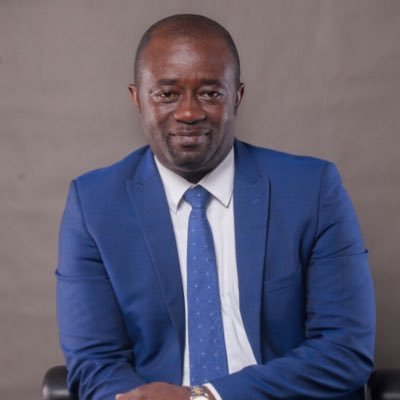
By: Bernard Yaw ASHIADEY










Facebook
Twitter
Pinterest
Instagram
Google+
YouTube
LinkedIn
RSS