


An agribusiness firm in Takoradi, B-Bovid Limited, has entered into a profit-sharing agreement with farmers engaged in oil palm production to enable them to earn additional income from their produce in a bid to incentivise and sustain the interest of farmers in oil palm plantations.
Under the arrangement, farmers who sell their palm fruit to the company will receive an end of year bonus from B-Bovid in addition to being paid the going market price for their produce.
This is the first time that a local agri-business has initiated a scheme that allows farmers to directly share in the fortunes of the company based on their production output. It is expected that the deal will help to boost the company’s palm oil business.
The Managing Director of B-Bovid Limited, Issa Quedraogo, explained to the B&FT in Takoradi that the bonus will be paid out of the profit made by the company’s palm oil business and will be based on the quantity supplied by a farmer to the company in a year.
“We know that agriculture has a huge potential to reduce poverty -- if we can better reward the farmers who supply us with raw materials, then that contributes to improving their livelihoods and that of their communities too.
“We believe that the status-quo is no longer sustainable. Our approach is that when it comes to agriculture, everybody within the value chain should be a winner,†he said.
Oil palm is widely considered as one of the most effective cash crops used in most developing countries to alleviate poverty. The product is also used in land reclamation programmes.
It has been projected that food demand due to chronic shortages of supply faced by most countries of the world will likely force the price of the commodity to increase in the next few years.
However, high production costs and low purchase prices have in recent times threatened the survival of oil palm plantations as farmers look to a more cost-effective cash-crop production such as cocoa and rubber.
Additionally, oil palm production -- the fifth largest crop in Ghana in terms of acreage -- is hampered by lower yields and lack of technology to boost production.
In recent times, it’s been found that new varieties of oil palm are capable of increasing the yield by three times.
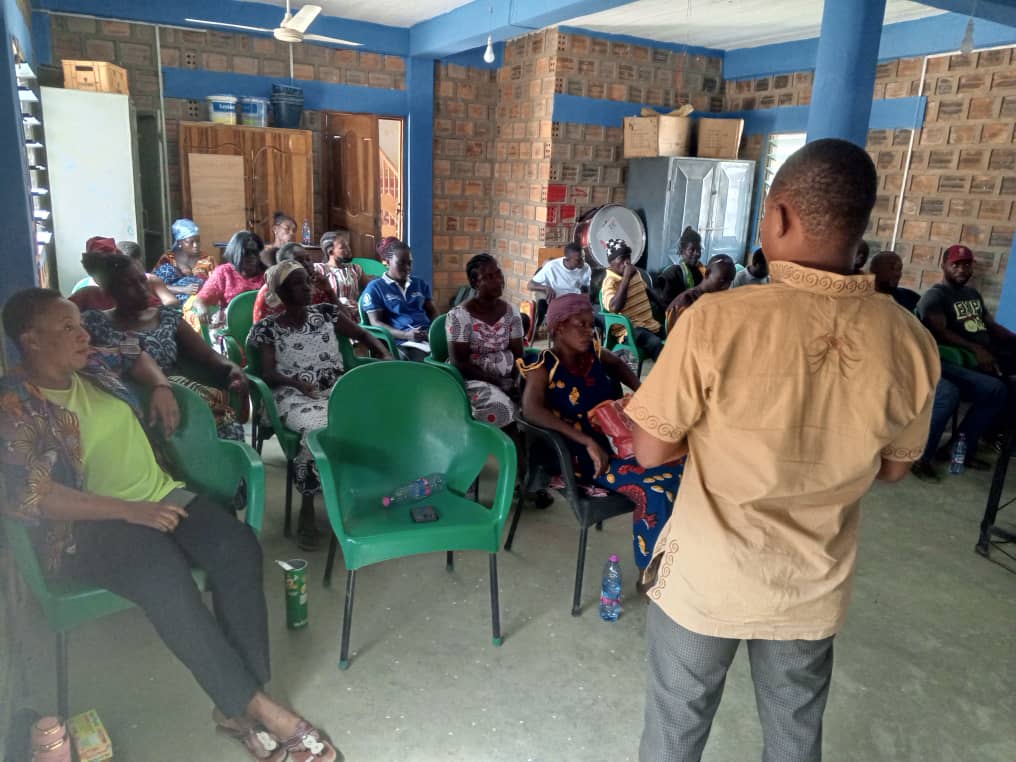
Mr. Quedraogo said B-Bovid has begun to utilise ICT to build the capacity of small-scale farmers.
“The essence of the training is to increase the volume and quality of their produce through the introduction of modern farming techniques, environmentally positive farming, business management, marketing skills and access to market,†he said.
He added that the company has procured a new technologically advanced palm oil and kernel mill, which is currently undergoing test runs with full operation expected by the end of this month.
He is hopeful that the processes and technology employed by B-Bovid will enable small-scale oil palm farmers to grow and expand their business.
Ghana has been growing oil palm since the 18th century. It is estimated that a total of 387,000 hectares of oil palm under cultivation forms just 7% of the total production within the West African sub-region.
The average yield per hectare of oil palm is between 3-7 metric tonnes per hectare (Mt/ha) compared to that of 20-33 Mt/ha in Malaysia, where only 26% of production takes place.
Currently, there’s a local unmet demand of 35,000 tonnes of palm oil. The estimated unmet demand in the ECOWAS sub-region alone is 850,000 tonnes.
The yield per hectare in the country is quite low compared to other oil palm producing countries. Nonetheless, the potential to increase yield is undisputed with the use of fertiliser among the smallholder farmers -- who incidentally are also utilised as out-growers for the corporate farms.
Indeed, in Ghana the bulk of oil palm cultivation (80%) is done by smallholders.
By Juliet Dugbartey | B&FT Online| Ghana








Facebook
Twitter
Pinterest
Instagram
Google+
YouTube
LinkedIn
RSS