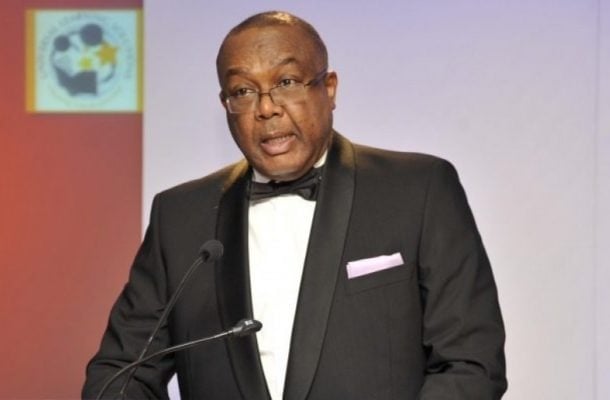
President John Dramani Mahama will be joining a select number of world and business leaders this week at the 2014 World Economic Forum Annual Meeting in Davos, Switzerland. This year's gathering is under the theme "The Reshaping of the World: Consequences for Society, Politics and Businessâ€. President Mahama is scheduled to chair a key session and also participate in various discussions on sub-themes, including climate change, the post-2015 development goals, the future of health and healthcare, the pressing youth unemployment challenge, and economic prospects in major emerging economies. The President will also take the opportunity to hold a number of bilateral meetings with world leaders and business executives on the margins of the Davos gathering, which opens on Wednesday. Accompanying President Mahama will be the Minister for Finance, Seth Terkper and the Deputy Minister for Foreign Affairs and Regional Integration, Ambassador Thomas Kwesi Quartey. Before arriving in Davos, President Mahama will participate in a high-level Abu Dhabi Sustainability Week programme - a large gathering focusing on tackling pressing issues such as renewable energy, water and the environment.
Another Ghanaian journalist has died hours after the nation received the shocking news of the death of BBC broadcster, Komla Dumor. Samuel Hesse, 35, a reporter at Metro TV, reportedly died Saturday night at about 10pm in a fit of asthmatic attack. He is said to have driven himself to a clinic where he later died. Sammy had been part of a small group of pals who were ruing the sudden demise of Dumor on Saturday shortly before he also passed away. He had worked with Metro TV for about eight years and got married only about a month ago.Â
I have heard with shock and dismay the disheartening news of the sudden death of Komla Dumor, the young BBC anchorman. Komla has been a source of great pride and joy to all Ghanaians as a hard working media practitioner who strove for excellence in journalism. I recall his trailblazing radio morning show in our country.His very professional and diligent approach soon turned him into a role model for many young journalists in Ghana and Africa. His sudden demise is a deep loss not just to media and journalism in Ghana but to Africa and the world. The world is certainly the poorer for his passing. He was somebody I was proud to call my friend. My wife, Rebecca, and I, and our children extend our deepest condolences to his bereaved wife, Kwansema, and his children, Elinam, Elorm and Emefa Araba, to his father, Professor Dumor, and the rest of the family, and pray for God's protection for them during these trying times.May his soul rest in perfect peace.He will be sorely missed.
The following is a tribute by the New Patriotic Party to the memory of broadcaster Komla Dumor. The New Patriotic Party is saddened by the loss of Komla Dumor, who died suddenly at his London home on Saturday at the age of 41. Undoubtedly, Komla Dumor was one of the brightest and best journalists our country, and indeed the rest of Africa, has been blessed with over the last decade. The leadership and entire membership of the party wishes to convey our thoughts, sympathies and prayers to the wife, children and family of Komla Dumor in this time of mourning. We hope you will be consoled by your cherished memories of Komla and be comforted by the presence of family and friends. Ghana is grateful for his dedication, pride in our country and service to Africa and the world.     It was through hard work and determination that he was, in November 2013, named in the list of 100 most influential Africans, as he established himself as one of the emerging African faces of global broadcasting, who had considerable influence on how the continent is covered. As a presenter on the BBC World News and its "Focus on Africa" programme, Africa's energy and enthusiasm seemed to shine through every story Komla told.We will miss him dearly and it is our prayer that God grants him rest and safely keeps him in His bosom. ……signed……Jake Obetsebi-LampteyNational Chairman                                Â
The National Democratic Congress (NDC) has received with shock the death of Mr. Komla Dumor, a Ghanaian broadcaster with the BBC. Mr. Dumor was one of Ghana’s distinguished broadcasters, whose dedication and hardwork earned him both local and international reputation. The NDC saw him as a committed broadcaster, with an unquestionable urge to pursue the cardinal principles of his profession – “loyalty to the people.†This zeal to defend the people was vividly demonstrated in his expression, “for the benefit of our listeners.â€We also remember him as an astute media practitioner with unflinching passion for the development of Ghana’s fledgling democracy which has become a beacon of Africa in democracy and multi-party practices. Indeed his role in Ghana’s democracy manifested in his desire to pursue issues of interest to their logical conclusion through interviews.The NDC on this occasion extends its sympathies to the family of the deceased, especially his wife and children. We wish also, to express our deepest condolences to the staff of Multimedia and the BBC, former and current employers respectively, before his demise.MAY HIS SOUL REST IN PEACE SIGNED – 19/1/14Johnson Asiedu Nketiah, General Secretary.
Ghana’s President John Dramani Mahama , in the following statement pays tribute to broadcaster Komla Dumor who died suddenly on Saturday, January 18, at age 41. It is with great shock and profound sadness that I learned of the sudden death of one of the most illustrious sons of Ghana, the internationally-acclaimed BBC TV broadcaster, Komla Afeke Dumor.Komla was a hardworking, dedicated and consummate professional, who blazed a trail, from his days of great success as Ghana’s most popular broadcaster with Joy-FM in Accra, where he won the Ghana Journalist of the Year award, to his inspiring rise at the BBC in London.Komla was a friend, a brother and a patriot, who cared very deeply about Ghana and Africa and also about global leadership that serves people and improve lives. His brilliant broadcast work during the recent passing of South Africa’s global icon, Nelson Mandela, was hailed by many around the world. He always sought every opportunity to share his deep passion for Ghana’s success. He called on me during his last visit to Accra and we discussed varied issues relating to Ghana and Africa. He invited me to take better advantage of BBC’s strategic reach to project the positive achievements Ghanaians are chalking.In his passing, Ghana, Africa and indeed the world have lost a great, dedicated and wonderful human being and world broadcaster. May his soul rest in peace.On behalf of my Government and the people of Ghana, I wish to express my deepest sympathies and condolences to his wife, Kwansema and the children and also to his father, Professor Ernest Dumor, his siblings Mawuena and Korshie the entire family. Our sympathies also go to his colleagues at the BBC and in the international broadcasting and journalism fraternity.
 Journalists who a participated in a day’s sensitisation workshop on genetically modified organisms (GMOs) seemingly ended up getting more confused after they had been exposed to the different sides of the biotechnology giving birth to the GMOs. Although all three resource persons who addressed the journalists said GMOs resulted from biotechnology, they shared different opinions and aspects of GMOs, which raised a lot of questions that, at certain points, almost turned the workshop into a debate, forcing the moderator to call the workshop to order on such occasions. The meeting, organised by the Graphic Communications Group Limited (GCGL), in collaboration with the Centre for Indigenous Knowledge and Organisational Development (CIKOD), was meant to educate the journalists on GMOs and what they portended for Ghana, Africa and the world. Making the first presentation, Mr Bernard Guri, leader of the CIKOD team, asked all stakeholders, as well as the government, to hasten slowly in putting Ghana on the map of countries that had adopted GMOs. “Food is not only for consumption but also the total well-being of people. It is power. It is an identity. If we modify the food we have, it means we lose our culture,†he stated. Mr Guri also said there was growing evidence of the negative impact of GMOs, while the European Union had banned GMO seeds because it was not sure of their safety. He asked the government to support research into using indigenous methods such as desmodium, a common legume-“weed†species that repelled the stem borer, an insect pest on the maize plant, to solve agricultural problems, instead of resorting to GMOs. He explained that there were still numerous uncertainties regarding GMOs, such as terminator seeds that could not be planted twice, the environmental and health impact on humans and their socioeconomic impact on farmers’ livelihoods because they would not be able to afford the seeds due to their cost and patent rights. Will Ghana shift completely to GMOs? Professor Walter Alhassan, a Biotechnology consultant (Policy), nonetheless, said the use of GM seeds would be the farmer’s choice when it was commercialised, while consumers would have a choice on the purchase and consumption of GM foods. He refuted the assertion that GM seeds could not be replanted and opined that Ghana was putting in place structures to adopt GMOs to replace other biotechnologies because every technology had a life span and had its efficacy reduced over time. Professor Alhassan asked for proper training of farmers on GMOs before they were allowed to grow crops that were genetically modified. Effects of GMOs Responding to the contention that there were visible health effects as a result of the consumption of GMOs, Professor Alhassan said no visible adverse effects of GMOs on farmers had been recorded yet. He stated that all the negative perceived attributes of GMOs also occurred in conventional crops. “There are problems with almost every crop. People have allergies. If the product is useful, use it,†he said. Professor Alhassan said while the anti-GMO agencies had enhanced awareness-creation activities, they had created a lot of anxiety among the public. According to him, the problems that the adoption of GMOs in Ghana was likely to face were rather infrastructure and other support services such as a market for the food and warehousing. Plant Breeders Bill While Mr Yaw Opoku, a member of Food Sovereignty, a grass-roots food advocacy movement, and Mr Guri maintained that the Plant Breeders Bill currently before Parliament was connected to GMOs, Professor Alhassan said it was not. Mr Opoku said when the bill, in its present state, was passed into law, it would give too much power to both local and foreign-based breeders. He stated that it would also allow foreign plant breeders to operate freely in Ghana, either directly or through agents in Ghana, and that most of the scientists advocating GMOs hoped to become agents for foreign-based breeders in order to make money. Â

 The death toll in the Kwahu-Fodoa gas explosion has risen to eight. Two more victims died at the Komfo Anokye Teaching Hospital (KATH) in Kumasi yesterday. That brings the number of deaths from the gas explosion in the farming community to eight. The deceased were among the 13 people who sustained various degrees of injury from the explosion and were referred to the Burns Unit of KATH last Wednesday. Victims identified The deceased have been identified as Basharu Mohammed, three; Ismail Mohammed, six; Abdul Aziz Mohammed, 16, and Jamal Mohammed, four, all siblings. Others were named as six-month-old Yussif Zakaria, whose body was burnt beyond recognition; Ramatu Hassan, Sahada Zakaria, four, and Salou Zakari. Their bodies have been deposited at the KATH and the Holy Family Hospital in Nkawkaw. Six others are on admission at the Holy Family Hospital, including a 25-year-old student of the All Nations University College in Koforidua, Hayford Adjei. Responding to treatment A medical officer at the Holy Family Hospital, Dr Kwame Hector, said the victims were responding to treatment. Seven others are also reported to be receiving attention at the Burns Unit of the KATH. The victims were among 28 people who suffered burns resulting from a gas explosion that sparked fireballs and a plume of black smoke that forced people out of their homes at Kwahu Fodoa. Â
Facebook
Twitter
Pinterest
Instagram
Google+
YouTube
LinkedIn
RSS