


Africa entered 2025 with a historic opportunity. For the first time, the African Union has placed reparations at the center of its continental agenda, framing it as part of its wider continental theme for 2025. This commitment invites us to confront a painful past – but more importantly – to redesign the systems that continue to constrain Africa’s prospects today. To this end, reparations should correct deep structural imbalances so that Africa’s land, people and resources drive shared prosperity, not persistent inequality.
Africa’s experience is distinctive. It is no secret that while Africa continues to operate within a global order shaped by enslavement, colonization and dispossession, the same extractive logic that once seized land now manifests in unequal trade regimes, inflated borrowing costs and credit assessments that undervalue African economies. In this regard, land governance, justice and reparations are not backward-looking debates; they are vital instruments of renewal for a continent that remains a marginal producer and a price taker within global value chains.
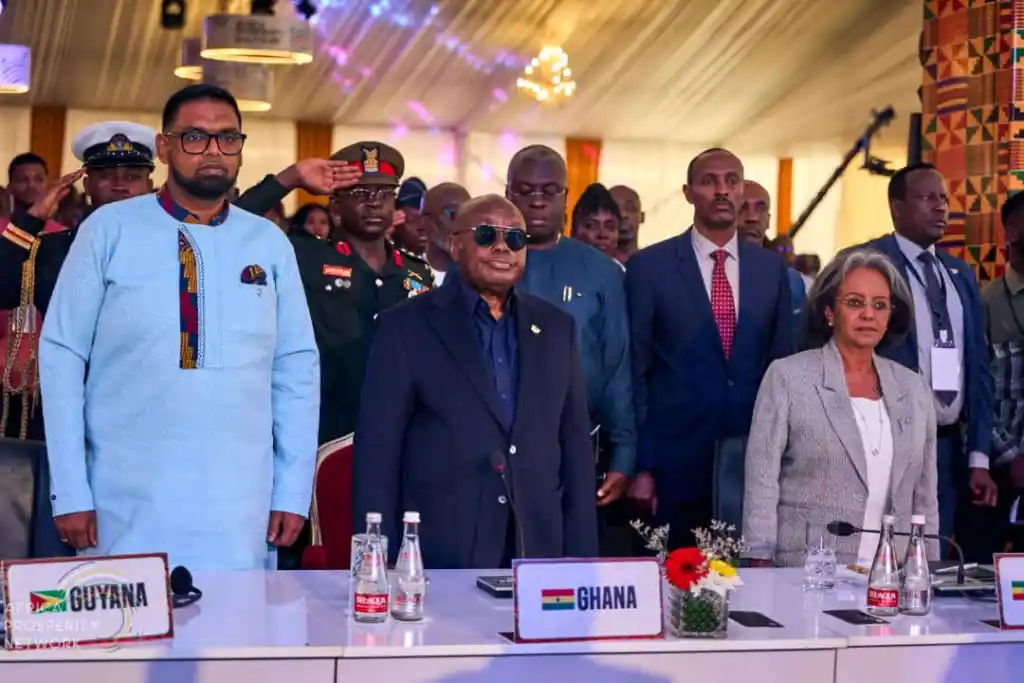
This is why the outcomes of the 2025 Conference on Land Policy in Africa (CLPA), held at the historic Africa Hall at the Economic Commission for Africa from 10–14 November, hold profound significance. Under the theme “Land Governance, Justice and Reparations for Africans and Descendants of People of the African Diaspora,” the conference positioned land as the connective tissue between historical injustice, present-day exclusion and future opportunities. It provides a continental platform to frame reparations as a forward-looking agenda that links land rights, fair finance, climate resilience and industrialization.
The imbalance is clear. Despite holding about 30% of the world’s mineral reserves, 65% of uncultivated arable land and the youngest population, Africa still accounts for only a small share of global trade and about 2% of world manufacturing. The continent loses an estimated US$88 billion annually in illicit financial flows, while unfair credit ratings and limited access to climate finance reinforce a cycle where resource wealth does not translate into structural transformation.
As concluded by the stakeholders that included farmers, traditional authorities, private sector, academia, governments and partners of the Economic Commission for Africa and its co-organizing partners – the African Union and the African Development Bank – transformative reparations must address the rules, incentives and institutions that keep Africa at the bottom of global value chains, including those that favour raw commodity exports over value addition.
This means dismantling the incentives that consign African countries to export cocoa beans instead of chocolate, lithium instead of electric batteries, or crude oil instead of petrochemicals. Reparations must empower Africa to generate and retain value, not surrender it.
At national and local levels, this begins with strengthening land governance and tenure security, especially for women, youth and smallholder farmers. Indeed, secure and transparent land systems are not only matters of justice; they underpin food security, investment, social stability and peace. They must form the foundation of any serious reparations agenda. Equally important, land governance should be nationally defined – shaped by sovereign legal frameworks, local contexts and community priorities. This means that reparations cannot impose one-size-fits-all approaches; rather, they must empower countries to determine and implement solutions consistent with their national realities. Beyond this, digital tools and climate-smart practices can modernize land administration, protect ecosystems and ensure that communities most vulnerable to climate change are not further marginalized or left behind.
Equally crucial are the institutions and actors that can turn this vision into reality. African universities, for example, must deepen their role as engines of problem-solving knowledge. They should align curricula with future industries, valorize indigenous knowledge and develop innovations that address land governance, industrial development and climate resilience. By working directly with policymakers and nurturing youth talent, universities can move the reparations agenda from rhetoric to implementable policy.
Here, the opportunities created by the African Continental Free Trade Area (AfCFTA) are decisive. With a combined GDP of roughly $3.4 trillion, the AfCFTA is the scale Africa needs to convert resource endowments into regional value chains, competitive African products and vibrant domestic markets. Reparations must therefore be linked to regional integration, not only to correct historical harm, but to create new economic pathways that will lead to dignified jobs, competitive industries and broad-based prosperity.
Transformative reparations must also recognize Africa’s sixth region – the diaspora – as a strategic partner rather than a peripheral actor. Diaspora capital, expertise and advocacy can accelerate Africa’s industrial, digital and knowledge transitions if channelled through structured vehicles aligned with continental priorities.
Equally, Africa’s support for its diaspora should go beyond remittances inflows towards policies that protect their rights, recognize their contributions and integrate their interests in the countries where they reside.
Ultimately, reparations that matter will be measured not by what they symbolize, but by whether they rebalance power over land, capital, technology and knowledge. When global finance becomes fair, when land rights are secure and inclusive, when African industries process African resources for both African and global markets, then reparations will have begun to achieve their purpose.
In that future, land will no longer be a source of dispossession, but the foundation of a just, prosperous and confident Africa.
By Claver Gatete
Author is the Executive Secretary of the Economic Commission for Africa (ECA), headquartered in Addis Ababa, Ethiopia.
The post Reparations for Africans must transform the systems that still limit Africa’s future appeared first on Ghana Business News.
Read Full Story






Facebook
Twitter
Pinterest
Instagram
Google+
YouTube
LinkedIn
RSS