


By Isaac Arkoh, GNA
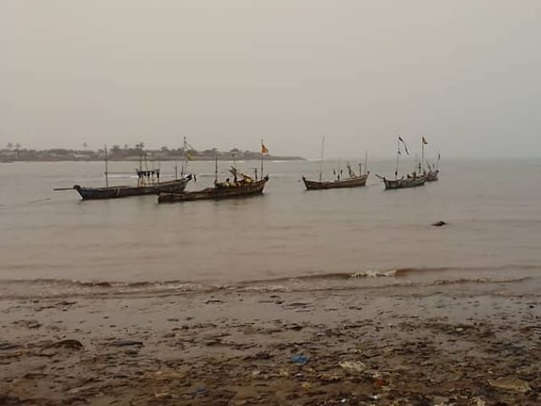
Cape Coast, May 10, GNA - The one month 'close season' to be imposed by the Ministry of Fisheries and Aquaculture is barely a week away but Oguaa Fishermen have expressed mixed feelings about its impact.
The ban is scheduled to start from May 15 to June 30 for artisanal fishing and August 15 for industrial fishers to replenish the fish stock in Ghana’s marine waters.
Speaking in an interview with Ghana News Agency, some fishers welcomed the move saying regardless of the numerous socio-economic drain the exercise may bring they had no choice than to adhere to it.
Mr Kwabena Ansah, a 34-year-old fisherman, said the excessive pressure and over-exploitation of fishing, especially through illegal methods, had negatively affected their incomes.
Emphasising the importance of fishing, he said the industry was a major employment avenue for many people and also contributed significantly to Gross Domestic Product (GDP), hence the need to protect it.
Mr Ansah noted that their role was strategic and it was prudent the Government continued to recognise and support fishermen and fishmongers with innovative measures and policies to revamp the sector.
He was full of praise of government for the distribution of 2000 outboard motors at subsidised prices to fishermen to facilitate their work while fishmongers received fish smoking accessories and aluminum pans.
However, Mr Ibrahim Fuseni, a 40-year-old fisherman, said though he was not enthused with the move, the Government must equally place a moratorium on illegal fishing, known as "sea galamsey" to prevent the depletion and destruction of aquatic life instead of the closed season.
Illegal, unreported and unregulated (IUU) fishing in Ghana was not only a serious threat to the ecology of the oceans but also denied the country the much needed tax revenues, which could be used to stimulate economic growth.
Mr Fuseni called on the Government to ensure that all forms of illegal fishing methods were halted to give meaning to the close season.
Auntie Efua, a fishmonger, rather asked the sector Ministry to move quickly to stem the menace of ‘saiko’ where some foreign fishing vessels deliberately and illegally fished in unapproved nautical miles, freeze their catch on the ocean and later sell to local fishermen on the high seas.
She said the saiko catch were mainly juvenile small pelagic such as sardines, chub mackerel and other juvenile fishes, thereby declining catches.
Other fishermen also indicated that both international and regional vessels were guilty of contravening existing regulations and hugely depleting fisheries resources and called for keen surveillance.
"Fish stocks are not restricted to national boundaries, and that is why the solutions to end the overfishing in our waters can only come from joint efforts from the sub-region and not Ghana alone."
GNA
Read Full Story





Facebook
Twitter
Pinterest
Instagram
Google+
YouTube
LinkedIn
RSS