


According to Elsie Addo Awadzi, such early prompting has ramifications not only for depositors but also for the stability of the entire financial system and the economy as a whole.
Speaking at a webinar for the Ghana Association of Restructuring and Insolvency Advisors (GRIA), the second deputy governor said: “the Basel Core Principles require bank supervisory authorities to have adequate legal powers to impose prompt corrective action on weak institutions to give them a chance of recovery within a reasonable timeframe which they are required to take steps to resolve these institutions under a special resolution regime.”
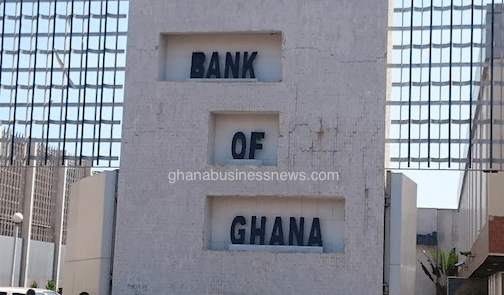
As part of its efforts to restore confidence in the banking and specialized deposit-taking sectors, the Bank of Ghana (BoG) embarked on a clean-up exercise in August 2017 to resolve insolvent financial institutions whose continued existence posed risks to the interest of depositors.
The clean-up saw the revocation of licenses of 9 universal banks, 347 microfinance companies, 39 microcredit companies or money lenders, 15 savings and loans companies, 8 finance house companies, and two non-bank financial institutions.
The move by the central bank was a comprehensive assessment of the savings and loans and finance house sub-sectors carried out by the BoG in the last few years after it identified serious breaches. Read Full Story







Facebook
Twitter
Pinterest
Instagram
Google+
YouTube
LinkedIn
RSS