


A pilot survey, which covered 878 establishments detected 11,657 job losses across all sectors of the economy, Mr Ignatius Baffour Awuah, the Minister of Employment and Labour Relations, has revealed.
The survey, which was commissioned by the Ministry, was to enable it (the Ministry) to understand the impact of COVID-19 on employment and reveal some dire consequences for jobs.
“We observed that whiles the pay cuts were rampant in large and medium scale establishments, workers in micro and small scale enterprises suffer most of the job loses,” Mr BaffourAwuah stated at the 12th National Development Forum in Accra.
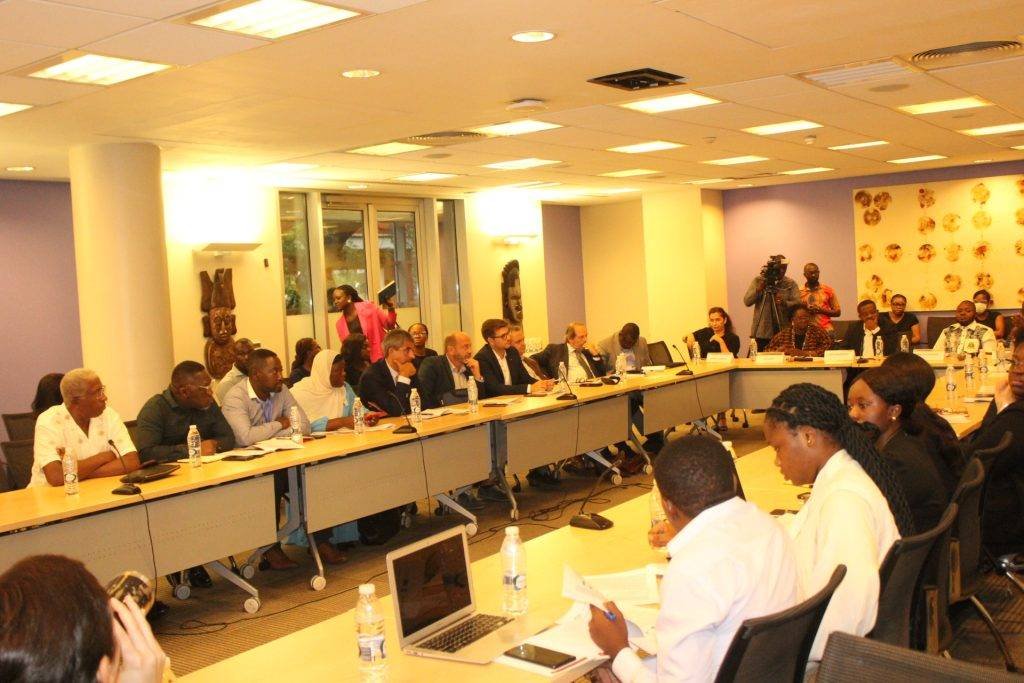
The forum, which was organised by the National Development Planning Commission (NDPC), was on the theme – “The Future of Work in Post-COVID-19 Ghana”.
The Minister said in terms of pay cuts, the survey revealed that large and medium scale establishments had to adopt pay cut strategies to keep some workers on their payrolls.
The survey indicated that generally, the 878 non-household establishments surveyed recorded 31.5 per cent job losses.
In terms of pay cuts, 40 per cent of the 17,685 workers interviewed suffered between less than 10 per cent and more than 50 per cent pay cuts to keep their jobs.
“It is important to note that the picture would have been more devastating if the survey was extended to cover the majority of workers in the informal sectors where over 80 per cent of the workforce is engaged,” the Minister said.
“The complete lack of effective social protection services for workers in the informal sectors was a major factor for the Government to reconsider the partial lockdown measures.”
Mr Baffour Awuah noted that despite the difficulties that had been imposed by the COVID-19 pandemic and its attendant restrictions, COVID-19 had brought to the fore the fact that work (the production of goods and services) could not always be done by traditional means.
This, he said, had become glaring as enterprises and workers had to contend with the mega trends, including pandemics such as COVID-19.
He said the public sector and other formal establishments had to adopt staff rotation schemes, work-from-home arrangements, and other digital platforms to maintain service delivery to their clientele and avoid productivity shortfalls.
He noted that some establishments in the services sector also adopted delivery platforms that enabled them to stay in business whiles observing the protocols.
“As Government, workers and employers, we have experienced how devastating it would be, particularly for those in vulnerable employment. As we prepare to enter the post COVID-19 era, we must learn lessons and put in place sustainable policy measures as well as mechanisms that ensure social justice and effective transition to the future.”
He noted that there was the need to invest in technological and innovative work processes to promote the employment and productivity enhancement objectives of Government.
“We must also invest in effective business development policies and programmes that provide support and ensure that enterprises are resilient to the changes anticipated from the future of work.
“We must also invest in effective active labour market policies and programmes aimed at providing skills that are responsive to the changing dynamics of the labour market, and which support individuals as well as groups to establish, manage and grow sustainable businesses for reduction of unemployment and poverty.”
Mr BaffourAwuah said the nation’s skills training programme should be able to provide versatile skills that would enable workers to enjoy the flexibility of moving from one job to the other.
He also called for investment in sustainable social protection schemes and expansion of coverage to all workers, particularly in the informal sectors to avoid overburdening the Government.
He noted that despite the difficulties that had been imposed by the COVID-19 pandemic and its attendant restrictions, COVID-19 had brought to the fore the fact that work (the production of goods and services) could not always be done by traditional means.
This, he said had become glaring as enterprises and workers had to contend with the mega trends, including pandemics such as COVID-19.
Dr Kodjo Esseim Mensah-Abrampa, the Director-General, NDPC, said contributions and recommendations from the National Development Forums were very vital to the work of the Commission.
The post Covid-19 pandemic 11,657 Ghanaians lose their jobs appeared first on The Chronicle Online.
Read Full Story




Facebook
Twitter
Pinterest
Instagram
Google+
YouTube
LinkedIn
RSS