


In the last week, Ghana has witnessed a disturbing turn of events: a coordinated attempt within Parliament to abolish the Office of the Special Prosecutor (OSP), the country’s most potent institutional weapon against high-level corruption. This attack, coming from lawmakers who should be defending the public interest, has reignited a pressing national question: Is corruption now fighting back?
The Chronicle observes with deep concern that this political offensive has unfolded at the same time reports emerged that Special Prosecutor Kissi Agyebeng has allegedly survived two assassination attempts. Whether coincidental or connected, the optics are troubling. When the very office mandated to investigate political graft becomes the target of legislative manoeuvring and personal threats, it suggests that entrenched corruption networks may be pushing back with alarming force.
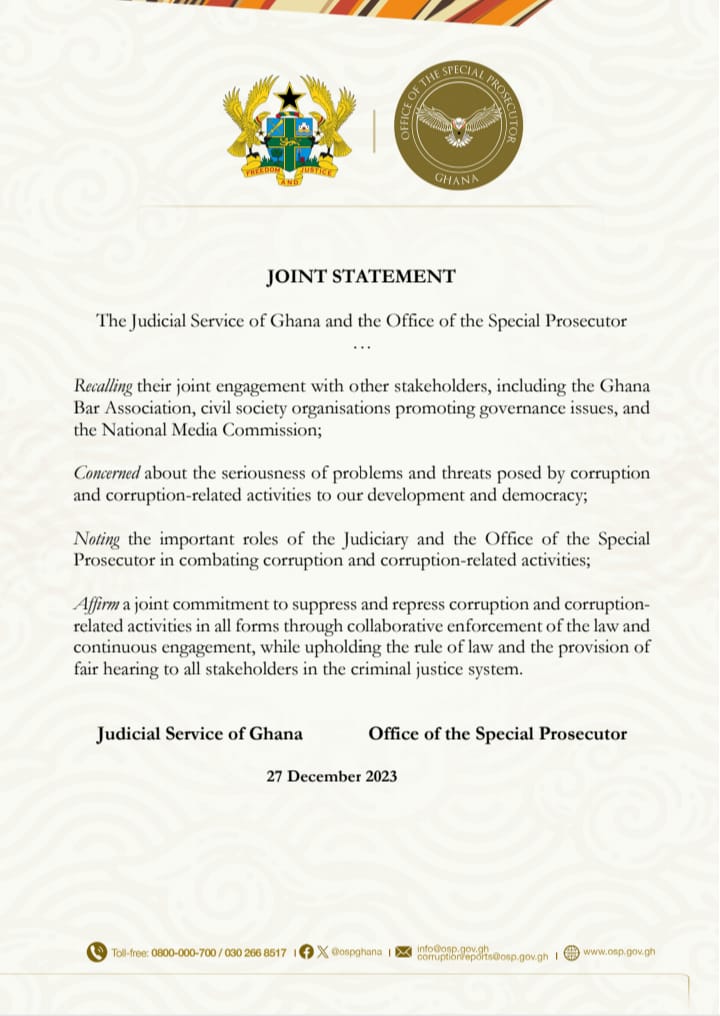
The OSP was established through Act 959 in 2017 and became operational in 2018. It was born out of public frustration with the limited effectiveness of existing anti-corruption bodies such as Commission for Human Rights and Administrative Justice (CHRAJ), Economic and Organised Crime Office (EOCO) and the Attorney-General’s Department. The OSP’s mandate was clear: an independent, specialised institution empowered to investigate and prosecute corruption especially political corruption.
It is, therefore, shocking that calls for its abolition now originate from both sides of Parliament. Even more astonishing is the fact that some of the MPs leading this charge formerly sat on the Constitutional and Legal Affairs Committee—the very committee that drafted and defended the legislation that created the OSP. Their sudden reversal raises serious questions about motive and credibility.
The Chronicle reminds Parliament that Ghana’s corruption crisis is not theoretical. It is real, systemic and costly. The Ghana Anti-Corruption Coalition estimates that the nation loses US$3 billion annually to corruption—money that could transform infrastructure, improve schools, modernise hospitals and create economic opportunity for millions. Corruption has long inflated the cost of public goods, weakened institutions and undermined trust in governance.
The creation of the OSP was a response to this reality. It was never intended to solve corruption overnight. No anti-corruption institution anywhere in the world achieves instant success. Yet the OSP has provided a deterrent effect and exposed questionable deals, including investigations such as the Minerals Income Investment Fund (MIIF) probe, which reportedly prevented potential losses to the state.
This is why the attempt by some MPs to use the Ken Ofori-Atta’s case as a basis to scrap the entire OSP is deeply flawed. As former Tamale Central MP, Alhaji Inusah Fuseini argued, it is intellectually dishonest to judge the usefulness of the OSP by a single case. Anti-corruption work is slow, complex and often met with institutional sabotage. To claim the office has failed after eight years ignores global experience and deliberately understates its preventive impact.
The Chronicle therefore, highly commends President John Dramani Mahama for acting swiftly to restore public confidence by directing Majority Leader, Mahama Ayariga, and Majority Chief Whip, Rockson-Nelson Etse Kwami Dafeamekpor to withdraw their repeal bill. His intervention has prevented what could have been a catastrophic blow to Ghana’s anti-corruption architecture.
However, The Chronicle urges the governing National Democratic Congress (NDC) to exercise restraint and avoid any posture that suggests an attempt to weaponise its parliamentary majority. Ghanaians are increasingly discerning. Any attempt—real or perceived—to weaken accountability institutions will not go unnoticed, nor will it be forgiven easily at the political altar.
If Parliament succeeds in crippling the OSP, it will not be the office that has failed, but rather the political establishment that has capitulated to corruption’s counteroffensive.
The Chronicle believes the recent developments are not mere political theatrics. They are symptoms of a deeper battle between reform and resistance—between the national interest and entrenched corruption.
The post Editorial: Is Corruption Fighting Back OSP? appeared first on The Ghanaian Chronicle.
Read Full Story



Facebook
Twitter
Pinterest
Instagram
Google+
YouTube
LinkedIn
RSS