
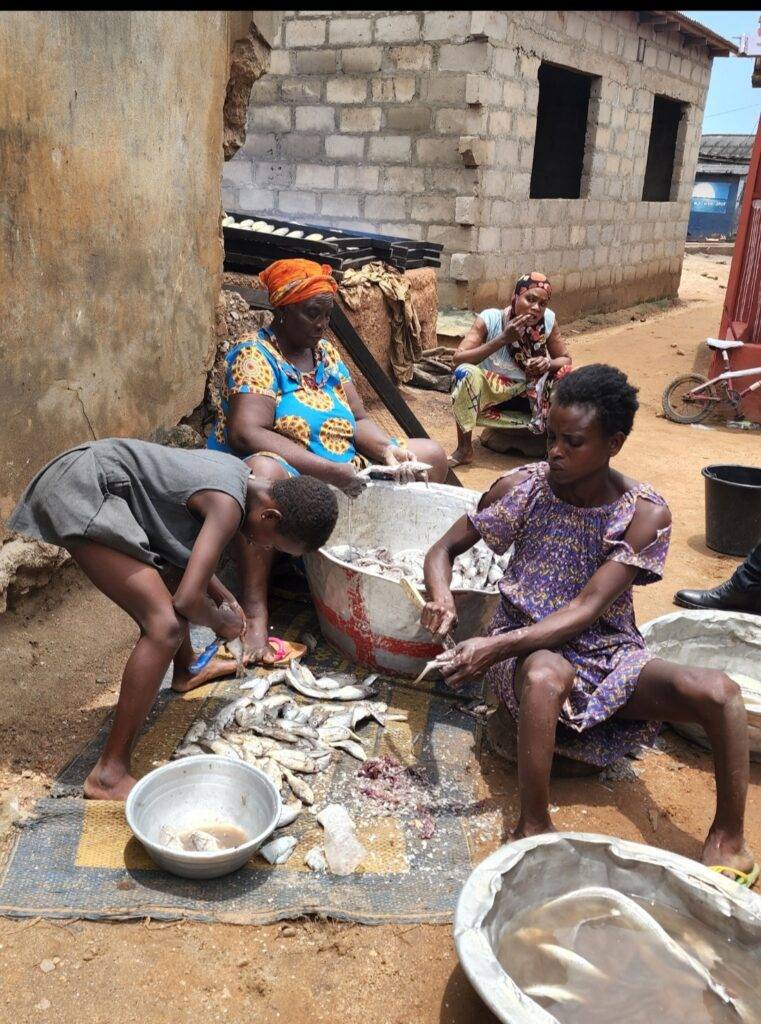

When his mother fell ill and started coughing incessantly, 37-year-old Kojo Ansong and his siblings thought it was a minor infection that would go away with some over-the-counter medication. It didn’t. The coughs became raspier, more frequent and she sometimes coughed out blood. That was when the family decided to seek expert medical advice. The first doctors they saw in the fishing community of Moree in the Abura-Asebu-Kwamankese District of the Central Region, seemed to know that there was a problem with 62-year-old Christiana Ntiamoah’s lungs. But they wanted to be sure and so they referred her to the Korle Bu Teaching Hospital in Accra, where after a battery of tests, Asong was told that his mum had lung cancer. The cost of treatment was more than the family could bear so they decided that perhaps the time had come for their mother to die.

“My mother died a painful death. At some point she could not even breath properly. She was always struggling in excruciating pain until she finally gave up the ghost,” Ansong says.
Doctors suspect the cancer that killed Mrs. Ntiamoah came from her long years of exposure to the toxic smoke emanating from the traditional oven she used to smoke fish for sale. She, like many women in Moree, are fishmongers. Smoking fish is how they earn a living to take care of their children and other dependents. But smoking fish is also how many of them die, according to doctors. And Ansong is worried that more women in Moree will suffer the same fate as his mother.

In Moree, like many coast communities in Ghana, men do the fishing and women smoke the fish to dry them as a means of preservation for sale later. Tradition forbids women from joining men on fishing expeditions and men deem fish smoking as the domain for women. So there’s very little chance of men engaging in fish smoking while women go to see. That means that women in such communities are disproportionately exposed to the health risk of fish smoking than men, even though the men in such communities could also be exposed to the risks of the air pollution from fish smoking.
Women in communities like Moree spend a minimum of six hours every day engulfed in the smoke emanating from their fish smoking ovens. A lot of them complain of symptoms such as dizziness, headaches, coughs, shortness of breath, chest pains and poor eyesight, all of which, according to experts can be linked to exposure to harmful polluting smoke from their traditional fish smoking activities.
According to recent air pollution data issued by World Health Organisation (WHO), people in Ghana are more likely to die from air pollution than those in some other comparable countries like Kenya and Rwanda. WHO also estimates that 28,000 Ghanaians die prematurely every year as a result of air pollution, making it the second highest health risk factor for death and disability, after malnutrition. And most people, particularly the women, in Moree know that their main sources of livelihood could also be leading them to their graves.

46-year-old Mary Nunoo says she has been in the smoked fish business for more than a decade now and does not see herself stopping any time soon despite the negative effects the smoke emanating from the traditional oven has on her health.
“I feel the eye irritation the moment I set the fire and the smoke start coming out,” she says. “The irritation in my eyes is followed by a cough but these discomforts do not last for a long time because when the smoke becomes too much, I take few steps away from the oven and only get very close to again it to check the fish and prevent them from getting burnt. Sometimes the headache does not stop until I take paracetamol. The healthcare professionals at the local health center always warn us about the dangers of the smoke we are exposed to, and I also know of someone who has lost her sight due to the long-term exposure to smoke. But we cannot stop this business since it is our only source of livelihood.”
Mary’s husband, 60-year-old Kwesi Abiri says he knew many women who lost their lives after battling ailments which their doctors said were caused by their exposure to smoke from the fishes they smoked for years.
Though these women have refused to believe the doctors’ diagnosis, Mr. Abiri said he was quite sure the doctors were right.
“I sometimes have fears because my wife is also into the same business and frequently complains of headaches, eye irritation and sometimes dizziness which goes away after a short time,” he says.
“I fear because I know this could end terribly if care is not taken. I personally do not get close to that oven. When I must speak with her and she is under the shade smoking the fish, I do not go beyond the entrance.”
It’s not only older, middle-aged women who are exposed to the pollution from fish smoking. Girls and younger women are often required or obliged to help their mothers and guardians who are engaged in fish smoking. And in Moree it is very easy to spot women smoking fish with their babies strapped on their back and sometimes with young children besides them.
21-year-old Esi Tawiah has been experiencing some difficulties with her breathing lately and she blames it on helping with fish smoking. Esi, a student and single mother, also says she has no other choice than to resort to fish smoking to fund her education, which she sees as her only path towards better job prospects in the future. In the meantime, she complains of occasional breathlessness and some asthma-like symptoms after engaging in fish smoking. These symptoms, she said, do not stop until she visits the health center for treatment. But sometimes she is unable to afford the medications prescribed by the doctor. She lamented that she had difficulty reading from the board in school due to irritation of the eyes, caused by the smoke. However, she said she still goes back to her fish smoking work, despite the risks and discomfort.
“If I do not go, I will not get money to fend for myself and my four-year-old son,” she says. “This work is making me sick, but I do not have any other choice. If I find a safer alternative I will not hesitate to quit.”
Aba Akyere also shares same experience as Esi but said she also could not stop because the fish smoking business belonged to her mum and she has to endure the discomfort to help her mum earn some money for the family’s upkeep.
A healthcare provider at the Moree health Center who didn’t want to be named in this story said many women who are into the fish smoking business in the area visit the facility with complains of headache, coughs, dizziness and other conditions.
Though he could not specifically say the symptoms were entirely caused by their exposure to smoke, he said there was a high possibility that it could be the cause.
He said patients who visited the facility with such complains were usually given the needed treatment. However, some of the conditions demanded care at bigger facilities such as the Cape Coast Teaching Hospital or the Korle Bu Teaching Hospital in Accra.
He also mentioned that such patients were educated on the level of risk they expose themselves to because of the work they do and how they could protect themselves.
Medical Oncologist, Dr Juliet Quansah confirmed that exposure to smoke for long periods could increase the risk of developing chronic lung diseases, including cancer.
She therefore advocated for an increase in awareness creation among communities with high number of women who are into the fish smoking business to save lives.
“We have to take issues like this seriously and educate these women about the dangers of the smoke they are exposed,” she added.
The Director of Climate Vulnerabilities and Adaptation at the Environmental Protection Agency (EPA) Dr Antwi-Boasiako Amoah confirmed that awareness creation regarding the health implications of exposure to excessive smoke would go a long way to help save lives.
However, the EPA, he said lacked adequate funds for such initiatives. He suggested that the Ghana Health Service (GHS) and various District Assemblies must also focus on implementing measures to address air pollution in general and pollution from fish smoking in particular.
Dr Amoah also suggested introducing the fish mongers to safe alternatives like modern ovens for smoking fish, reducing their dependence on wood burning which generates more pollution.
“This fish smoking activity involves every member of the family, including children. All these individuals and their neighbours are affected by the smoke and its toxicity which accumulates over time and cause harm to the body,” he says. “The sad part of this whole issue is that those affected do not believe that certain ailments their relatives who were engaged in the fish smoking business had, were likely caused by their exposure to the smoke.”
He therefore advised the fish smokers to desist from involving their children in the process, to prevent them from inhaling harmful toxins in the smoke emanating from the ovens which could have serious health implications for them or affect their cognitive abilities.
Dr Amoah also encouraged the women to do the fish smoking in an open area as much as possible to minimize the effect, as the oxygen in the open can dilute the effects of the harmful smoke.
Also, he mentioned that it was very necessary for the fish smokers to make deliberate efforts to reduce the number of hours they spend smoking fish each day, “even if it means finding an alternative means of livelihood.”
“This story was a collaboration with New Narratives. Funding was provided by the Clean Air Fund. The funder had no say in the content of the story.”
BY RAISSA SAMBOU
The post Fish smoking: The livelihood causing pain and deaths in coastal communities appeared first on Ghanaian Times.
Read Full Story




Facebook
Twitter
Pinterest
Instagram
Google+
YouTube
LinkedIn
RSS