


The import of the said regulation quoted above means that if you do not have in your motor vehicle a pair of advance warning triangles, you have no right or business moving your motor vehicle from your house, garage or wherever on to the road. From time immemorial, the designers and manufacturers of Mercedes Benz cars always provide a pair of advance warning triangles in the boot of the car, demonstrating and emphasizing the usefulness and indispensability of a pair of advance warning triangles.
Essentially, there are three basic signs with different shapes, namely circular, triangular and rectangular. For the purpose of education and information, triangular signs warn, circular signs direct and rectangular signs inform. That is why the advance warning triangle sign is in a triangular shape.
Notwithstanding the explicit statement, requirement and directives, it is common knowledge that on our roads, motor vehicles of all lengths, types, when broken down on the road, are left without positioning advance warning triangles. The driver and his mate go home and sleep. What is most disturbing is the fact that Heavy Goods Vehicles carrying containers break down on the road and no advance warning triangle is positioned at the rear of the vehicle. Some drivers place empty gallons at the rear of the vehicle. The goods in the container can buy thousands, if not millions, of the advance warning triangle.
If we place value on human life, we will not leave broken-down vehicles on the road and leave approaching vehicles and users of the road to their fate. The contents of Regulation 83 imposed duty on both the owner and the user of the motor vehicle that before any motor vehicle is allowed or permitted to enter and use the road, the user must ensure that the vehicle is equipped with and is carrying a pair of advance warning triangles. It is not for decoration that the manufacturers of Mercedes Benz equip the car with a pair of advance warning triangles. Emergencies can occur unexpectedly. If it does occur, you are ready and positioned to respond.
Although the personnel of the Motor Transport and Traffic Department of the Ghana Police Service are mandated to check and enforce the Road Traffic Regulations, the attainment of safety on the road is a shared and collective responsibility. The officials of various Driver Unions and Associations who operate at the lorry parks and stations could, before collecting dues or fees, inspect and ensure that any vehicle that is either entering or departing from the station is carrying a pair of advance warning triangles. It will be their widow’s mite to save a life or lives on the road.
If a passenger bus is disabled on the road and is left on the road without a pair of advance warning triangles, and in the night another vehicle runs into it, whatever dues that owner contributes to the union would be lost for a period of time, not to mention injuries or loss of life that may be experienced.
Roundabout
Road signs and markings are available and applicable outside the jurisdiction of Ghana. This has been agreed upon by the International Vienna Convention on Road Traffic concluded at Vienna on the 8th of November 1968. In our beloved country, our drivers, both private and commercial, do not respect road signs and markings.
The basic rule in relation to the use of a roundabout is that as you approach a roundabout, you are required to give way to traffic which is already in the roundabout. The Department of Urban Roads provides traffic signs and give way signs as you approach the roundabout. Day in, day out, it is common to see drivers approaching the roundabout who increase the speed of their vehicles to intimidate drivers who are already in the roundabout.
More often than not, this offence is committed by drivers of heavy goods vehicles and mini-buses carrying passengers, thereby risking the lives of passengers. Have the passengers paid their fares to be exposed to risks and, if not lucky, to die prematurely?
Motorcycle
Another class of road users that falls within the class that refuses or fails to place value on human life is motorcycle riders. It is a common sight to observe both riders and pillion riders sitting on motorcycles without wearing crash helmets. Another prevalent behavior of riders is to wear the helmets without fastening it. In the event of a crash or unexpected event leading to any jolt and the helmet falls, his head will be exposed. It is known that head injury is the number one killer of riders and pillion riders. Road crash analysis reveals that head and neck injuries account for the majority of serious and fatal injuries to motorcyclists.
No matter what the speed, helmeted riders are three times more likely to survive head injuries than those not wearing helmets at the time of the collision. Helmets must be securely fastened on your head whenever you sit on the motorcycle. Otherwise, if you are involved in a road crash, the helmet is likely to fly off your head before it gets a chance to protect you.
The designers and manufacturers of the motorcycle have reasons why only two seats are provided for the rider and pillion rider, but what we see on our roads and public places is three or four people on a motorcycle meant to carry only two persons.
Regulation 84(1) of the Road Traffic Regulations, 2012, LI2180 states: “A person shall not ride or be a pillion rider on a motorcycle, motor tricycle or a motor quadru-cycle or in the sidecar attached to a motorcycle, unless that person wears reflective clothing and a protective helmet that (a) is specially designed for use in connection with the cycle and (b) fits properly with the chin strap properly fastened under the chin.” The importance of the regulation is that wearing reflective clothing and protective helmets are condition precedent for the use of motorcycles.
The wearing of reflective clothing and protective helmets are non-negotiable once you decide to use the motorcycle either as a rider or pillion rider. But what do we see on the roads? There is blatant non-compliance with a rule that is to protect lives. Reflective clothing enables you to be seen by other road users, particularly drivers of motor vehicles. Do the leadership of Okada Riders Association ensure that their members comply to the letter and spirit of Regulation 84? I am only asking a harmless question.
Another unacceptable riding pattern of riders of motorcycles is to ride against opposing traffic. Yet another irritating and unsafe practice is to make turnings in front of approaching motor vehicles, forgetting that when turning, your speed reduces and meanwhile the approaching motor vehicle is driving at a speed you are not aware of. It is equally surprising that we at times find motorcyclists riding with one hand and talking on the mobile phone with the other hand.
A key routine safety procedure is Mirror, Signal and Maneuver, which is already referred to as MSM. The question to ask is, do we follow this routine religiously and always? It is observed that mirrors are installed on motor vehicles, motorcycles and bicycles for a purpose. Mirrors are meant to enable you to view and observe approaching vehicles from the rear.
If we should stop a number of motorcycles on the road, you would be surprised that the owners removed the mirrors from the motorcycles. Quite a number of drivers turn before signaling. I will advise that as a check when approaching a junction, watch the body movement of the other vehicle. One of the skills in defensive driving is to expect the unexpected and also never assume that those you are sharing the road with will do the right thing.
Another disturbing attitude of motorcyclists is failure or refusal to stop at traffic lights when the traffic lights turn red but rather speed away when the lights are RED. Why is it that in Togo, one of our immediate neighbors, motorcyclists come to a complete stop at traffic lights when the lights turn red? You will never see motorcyclists riding through red lights. Is it the case that the Togolese place more value on human life than we Ghanaians, or are they more disciplined, or the enforcement regime is very strict and punishment for infractions is swift and severe? This matter needs to be questioned further.
BY J.M.Y AMEGASHIE, ESQ
Follow our WhatsApp Channel now! https://whatsapp.com/channel/0029VbAjG7g3gvWajUAEX12Q
The post To reduce deaths on the road through crash – Let us place value on human life (Part 2) appeared first on Ghanaian Times.
Read Full Story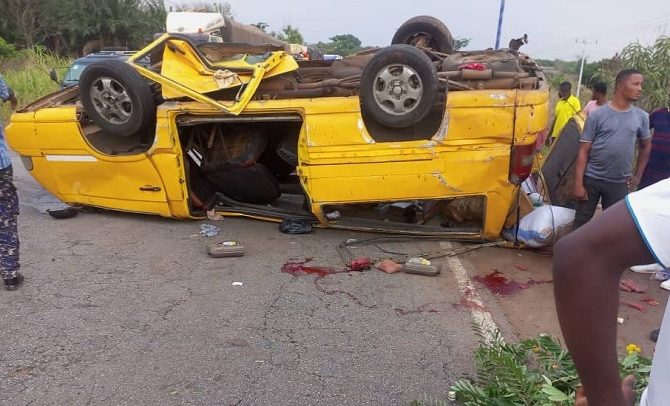


















Facebook
Twitter
Pinterest
Instagram
Google+
YouTube
LinkedIn
RSS