


A federal jury in Brooklyn recently convicted Asante Kwaku Berko, a dual U.S.-Ghanaian citizen and former Goldman Sachs executive director, on all counts of conspiracy to violate the Foreign Corrupt Practices Act (FCPA), a substantive FCPA violation and conspiracy to commit money laundering.
The verdict, delivered on August 6, 2026 after a nine-day trial before U.S. District Judge Diane Gujarati in the Eastern District of New York, relates to the financing and construction of a power plant in Ghana between 2014 and 2017. Berko faces a maximum sentence of 30 years in prison when he is sentenced on November 10, 2026 and has been remanded pending sentencing.
According to the U.S. Department of Justice (DOJ), Berko was tasked, beginning in December 2014, with managing a deal between Aksa Enerji, a Turkish energy company and Goldman Sachs client, and the Government of Ghana for the construction and financing of the plant. Prosecutors told the court that he and his co-conspirators paid and conspired to pay more than $1 million in bribes to Ghanaian officials to secure the deal.
The DOJ’s statement, on which this account relies, describes specific conduct alleged and proved at trial, a 2015 discussion of a $1 million payment to Ghana’s then Minister of Power and $250,000 to a senior adviser; bribes to five officials during a trip to Turkey to inspect equipment; and following parliamentary ratification of the deal in July 2015, a discussion about $250,000 in further payments, including $46,000 described as going to Members of Parliament.
These are allegations contained in a U.S. government charging and trial record on which a jury returned a guilty verdict, a materially different evidentiary status from an unproven claim, though it should be noted that no named Ghanaian official, including any member of Parliament, has been criminally charged in either the United States or Ghana in connection with this matter.
This is not Berko’s first exposure to U.S. enforcement over the same conduct: the Securities and Exchange Commission secured a civil judgment against him in June 2021 requiring disgorgement of ill-gotten gains. Goldman Sachs, according to the DOJ, withdrew from the transaction after identifying corruption concerns.
The Office of the Special Prosecutor has said it assisted the FBI’s investigation, and Deputy Attorney-General Justice Srem Sai has said the Attorney-General is coordinating with U.S. counterparts on any Ghanaian officials implicated.
The Chronicle regards this conviction as a serious reputational setback, not because a Ghanaian court has made any finding, but because a U.S. federal jury’s verdict, built on trial evidence, including internal communications, now sits in the public record alongside detailed allegations naming Parliament as a recipient of bribe payments tied to the ratification of a major energy contract.
That distinction matters and readers should hold it in mind: what has been proven in Brooklyn is that Berko conspired to bribe unnamed Ghanaian officials. What has not been established, in any court, is which individuals inside Parliament, if any, received money or knew what it was for.
That caveat does not make the matter any less consequential for public confidence. Parliament is not new to allegations of this kind. In 2017, MP Mahama Ayariga accused a ministerial nominee of attempting to induce Appointments Committee members with cash payments; a parliamentary ad-hoc committee investigated and found no proof the money was intended as a bribe.
Former Attorney-General Martin Amidu has separately and publicly alleged that both the Fifth and Sixth Parliaments compromised their oversight of major loan agreements, though these remain his assertions rather than adjudicated findings. Taken together with the Berko case, the pattern is one of recurring allegation rather than proven institutional wrongdoing, but recurrence of allegation is itself a legitimate public concern, distinct from the question of guilt.
Parliament is Ghana’s central institution of democratic oversight. When U.S. court documents place its ratification of a $1 million-plus contract alongside bribe discussions, silence from the House is not a neutral option. The Chronicle takes note of assurances offered on social media by the Deputy Attorney-General that Ghanaian authorities are pursuing the matter with their U.S. counterparts. That is a necessary step, but it is an executive-branch undertaking; it is not a substitute for Parliament’s own account of itself.
The Chronicle, therefore, urges Parliament, currently in recess, to recall and open an inquiry into the allegations arising from the Berko trial record, and to state clearly and specifically how it intends to establish whether any current or former member received the payments described in the U.S. proceedings. An institution that is repeatedly named in corruption allegations, however unproven, cannot allow its credibility to be settled by default. It should be established, where the evidence permits, by its own inquiry.
For more news, join The Chronicle Newspaper channel on WhatsApp: https://whatsapp.com/channel/0029VbBSs55E50UqNPvSOm2z
The post Editorial: A U.S. Conviction And Questions Parliament Cannot Avoid appeared first on The Ghanaian Chronicle.
Read Full Story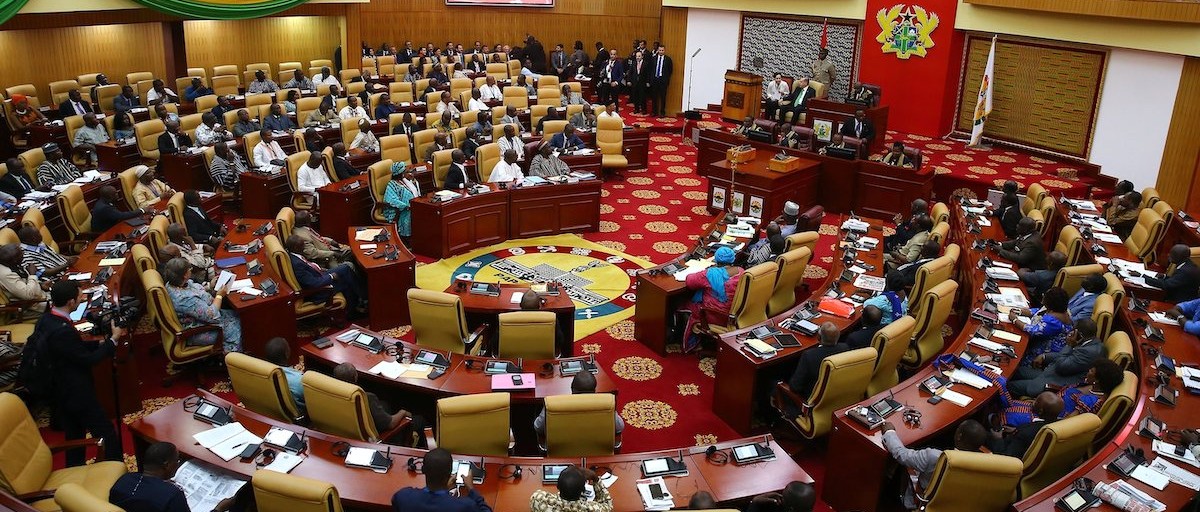




Facebook
Twitter
Pinterest
Instagram
Google+
YouTube
LinkedIn
RSS