


The Minister for Works, Housing and Water Resources, Kenneth Gilbert Adjei, has raised alarm over Ghana’s water access crisis, despite the country’s abundant natural water resources.
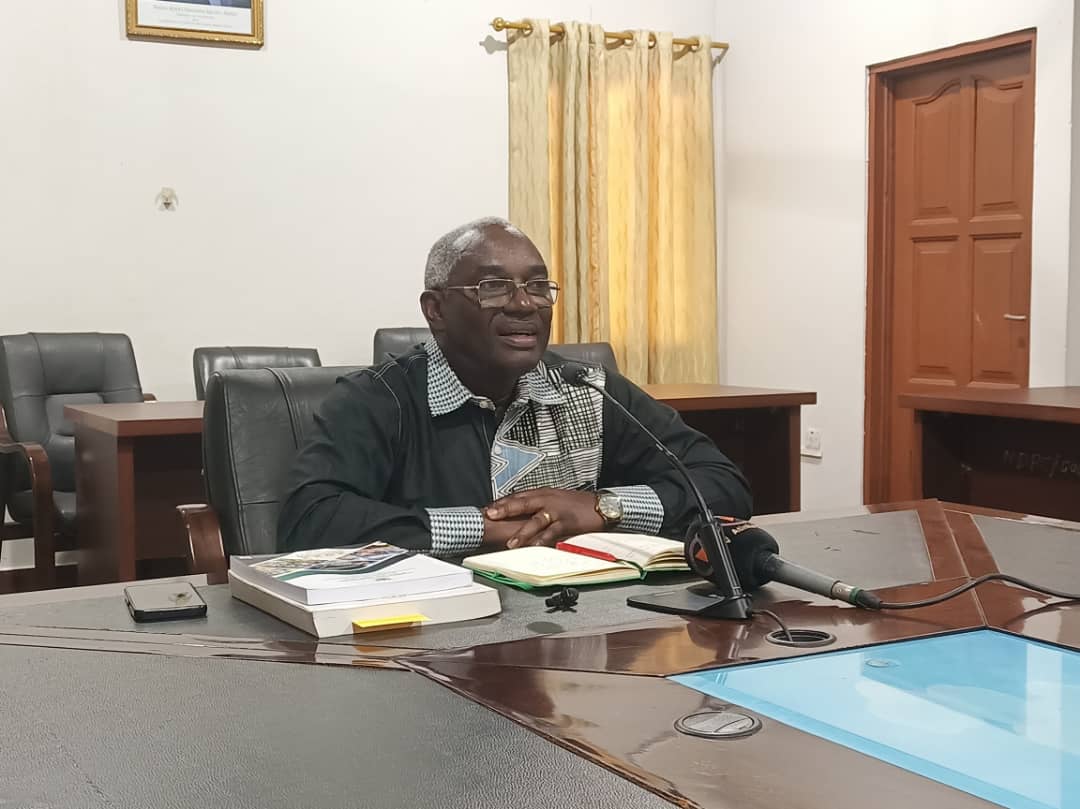
Speaking at the Government Accountability Series, which was monitored by The Chronicle, the Minister said data from the Ghana Statistical Service and the WHO/UNICEF Joint Monitoring Programme show that while 88 per cent of the population can access basic water services, fewer than half enjoy safely managed water, defined as water that is available on premises, reliable and free from contamination.
Water access remains deeply unequal, he noted. Urban areas record coverage of 96 per cent while rural communities average 34 per cent, with some regions reporting rates as low as 42 per cent. Even where systems exist, supply is often intermittent and unreliable.
The Minister for Works, Housing and Water Resources identified non-revenue water, currently estimated at 80 per cent, as a major threat to urban water supply, far above the international benchmark of 25 per cent.
He added that ageing infrastructure, low maintenance investment, pollution, climate variability and high operational costs continue to undermine service delivery.
Nearly four million Ghanaians, he said, still depend on surface or limited water sources.
To improve access, the Minister announced progress on key urban water projects, including Keta (72%), Wenchi (91%) and Sekondi-Takoradi (89%), with new projects in Damango and Sunyani set to begin soon.
Government is also finalising funding for water projects in Tamale, Yendi, Techiman and Tarkwa, while Danish grant support will expand services in low-income communities in Wa and Bolgatanga.
The Minister warned that Ghana’s per capita renewable water availability has dropped from 3,000 cubic metres in the 1960s to about 1,650 cubic metres today, below the UN water-stress threshold.
He attributed the decline to climate change, illegal mining, deforestation, poor land use and rapid urbanisation, noting that over 50 per cent of river catchments have been degraded.
He said government, through the Water Resources Commission, is restoring buffer zones, strengthening local water governance and deploying digital systems to regulate mining and protect water bodies.
Two new legislative instruments on riparian buffer management and waste discharge control are also being prepared for Parliament.
Despite financial constraints, Kenneth Gilbert Adjei reaffirmed government’s commitment to water sector reforms and called for stronger collaboration among state institutions, communities and development partners to secure safe and reliable water for all Ghanaians.
For more news, join The Chronicle Newspaper channel on WhatsApp: https://whatsapp.com/channel/0029VbBSs55E50UqNPvSOm2z
The post Only 44% of Ghanaians have access to clean water appeared first on The Ghanaian Chronicle.
Read Full Story



Facebook
Twitter
Pinterest
Instagram
Google+
YouTube
LinkedIn
RSS